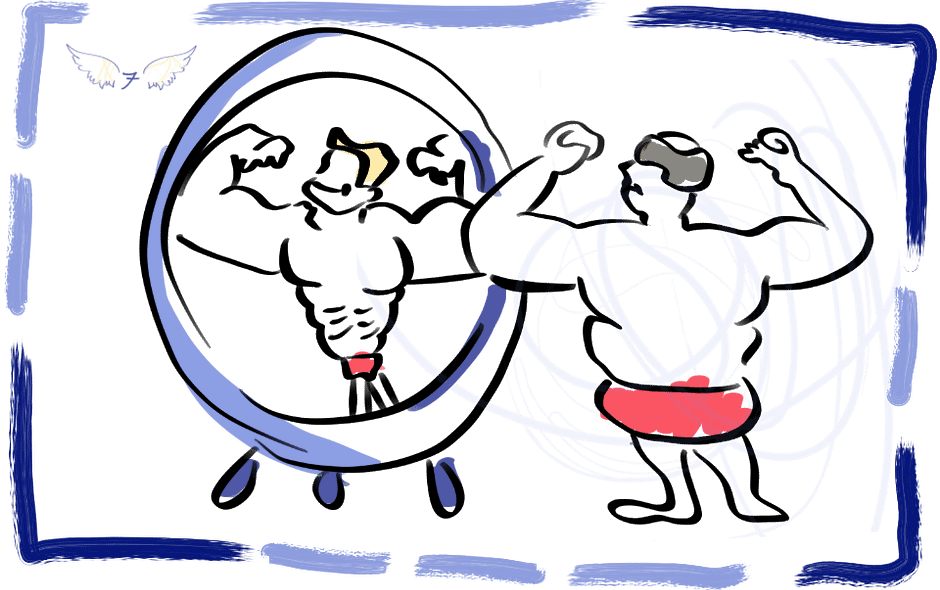
Reality is a Thing of the Past!
What if the reality you trust is nothing more than a story your subconscious tells you? What if your beliefs – formed before you even understood the world – are secretly running your life? The truth is, the world you see isn’t what’s real; it’s what your mind wants you to see. And that changes everything.
Deep within the hidden corridors of our minds, potent beliefs about ‘self’ are quietly scheming
Our core beliefs silently shape every move we make and the reality we craft for ourselves each day. And forgotten beliefs from your earliest days hold the key to unlocking the confidence we all seek as adults.
This chapter will reveal not just how these beliefs form, but how they grow to become our self-image or Identity. And this is what secretly governs our lives, often in ways we least expect.
How Beliefs are Born and Grow Into Self-Image
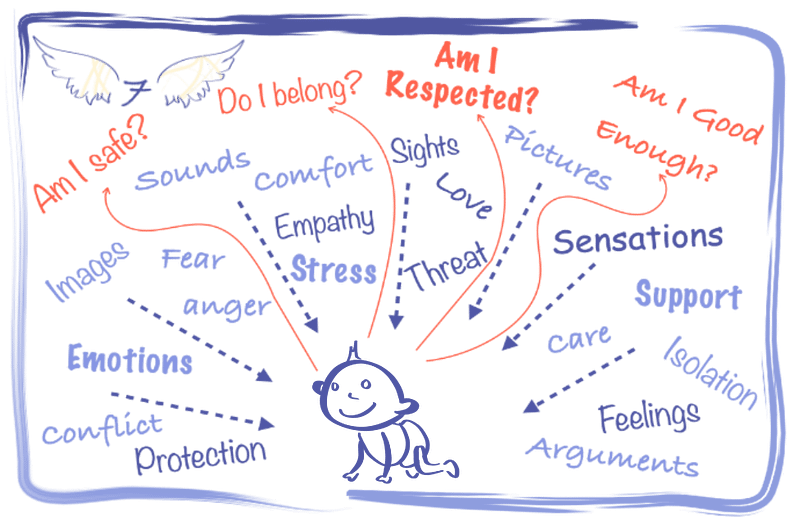
Our self-image begins to build as soon as we come blinking into the world as a newborn child.
From the very first moments of life, a child experiences an explosion of learning.
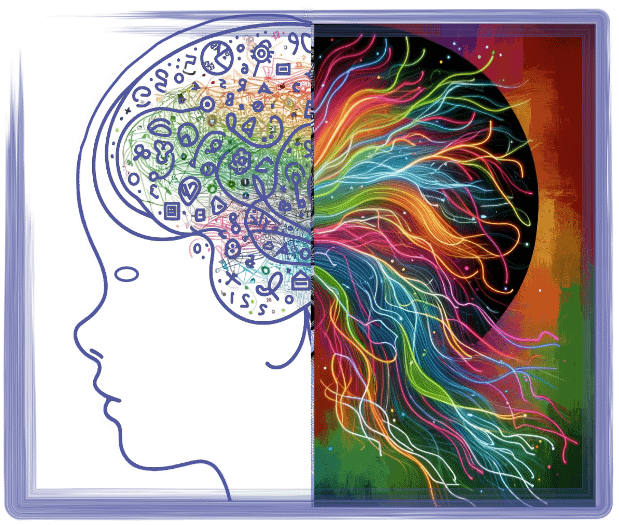
The infant’s subconscious becomes a sponge, soaking in every exchange, every event. It absorbs every sight, sound, scent, sensation, and taste encountered.
The child’s senses stream millions of bits of data every second. It’s a vast torrent so fast and chaotic that the child’s mind is at risk of being overwhelmed.
To cope with this flood, the child’s subconscious starts to pick out and store fragments of information that it believes are part of recurring patterns. They become a kind of mental shorthand.
The child’s subconscious predicts what it believes these patterns mean in the child’s world. It’s trying to make sense of chaos and find order in the sensory overload.
It merges the meanings learned from these patterns into the child’s evolving sense of reality. Shaping how they analyse and react to the world around them.
The ‘shorthand’ we all work out in our early years can last a lifetime. And, as adults, we still use it to quickly extract meaning from the torrent of data streamed through our senses every second.
But this practice can lead to mistakes. Because our subconscious will use these shortcuts as a frame through which it views the world, a little like wearing glasses with coloured lenses. Everything you see is tinted and changed.
Here It Comes – Edited Reality
For example, take a look at the cow picture below which vividly illustrates how our subconscious edits our perception, leading to what we term as ‘Edited Reality’.

Very early in your life, you stored away an image of a cow deep in your subconscious. Whether you saw one in real life or in pictures, your subconscious doesn’t waste time checking this one.
It picks out a part of the pattern it recognises and assumes it’s like every other cow you’ve seen. And so it presents that ‘reality’ to your conscious awareness. After a few moments, your senses adjust, and you notice that its markings are, in fact, a map of the world.
Each of us tends to think we see things as they are, that we are objective. But this is not the case. We see the world, not as it is, but as we are conditioned to see it
STEVEN COVEY
By the way, did you also notice the two faces on the head of our cow above?
The pattern selection process does more than store shortcuts for sifting and sorting meaning from confusion. We develop beliefs about how the world works during our early years;
And, as we did with the Cow image above, these beliefs colour our perception of the world around us. For example, take a look at the next picture.
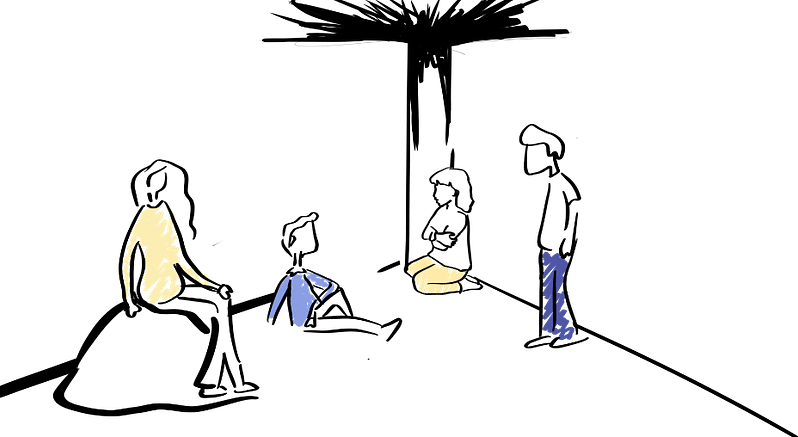
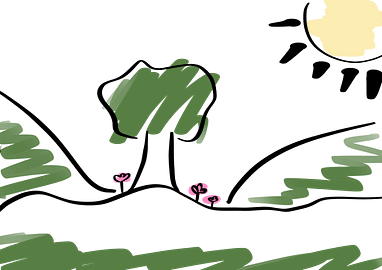
If you spent your childhood in a city, you would likely see a drawing of a group of people in a room. You’d see walls, the corner of the room and a ceiling. Perhaps the figure standing on the right is leaning against a wall?
In fact, this image is a picture of people sitting and standing under a tree. Can you see both versions now?
Children who grow up in modern cities see straight lines all around them from birth.

They’re everywhere: in buildings, street fittings, furniture, household objects, toys, etc. This becomes a familiar pattern to the subconscious, and so it’s stored away.
Whenever the subconscious thinks it has found the pattern in real life, it’s placed into your conscious reality. And so, when you look at the picture of the group under a tree above, you assume it has straight lines, and your reality is that there are walls and a ceiling.
On the other hand, the Bush is an organic environment with no straight lines. People who grew up in such a setting have assumptions of a more natural world. And so, they construct a reality of an outdoor scene from that group picture.
So we can see that our subconscious develops beliefs about how the world works. And these beliefs guide it to edit the way we see the world around us. In other words, it changes our reality to fit its beliefs.
This is what we call, Edited Reality.
Now, we’ll see that Edited Reality is about more than just ‘editing’ what we perceive through our senses. In fact, the editing is shaped by beliefs about our self-worth, confidence and abilities.
Have You Ever Lost Control?
As we delve into the secrets of our subconscious and conscious minds, it would be useful to keep in mind a personal challenge that you can relate these ideas to.
So please take a moment to recall a moment of difficulty or adversity. One that came upon you without warning and caught you unprepared.
It doesn’t have to be a big issue and could have been short-lived. But it’s one that created that familiar tug-of-war between your spontaneous impulses and your more deliberate, thoughtful side.
Keep this scenario in mind as you read on. You’ll see how these inner battles reveal how easily our conscious minds surrender control of our thoughts and actions.
The Building Blocks of Confidence and Self-Belief
The subconscious can model and hold a vast store of the type of shortcuts we describe above. However, some of the patterns to emerge from this rapid learning phase are many times more potent.
Safety, Belonging, Esteem & Capability
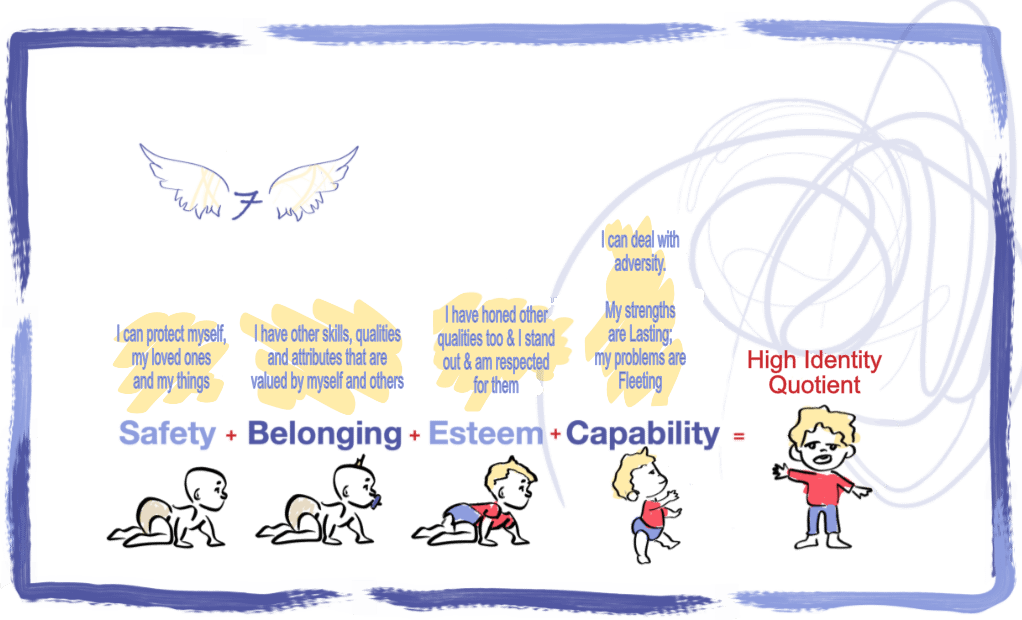
A child’s most meaningful beliefs are about whether they are safe, loved, and belong. And if they believe they are capable and whether their life has a purpose. These are the building blocks of confidence, self-belief and mental strength.
The lessons they learn for each of these qualities develop into beliefs about their place in the world and how it treats them.
And, as with our pictures above, these beliefs will edit the child’s reality to match. For example, imagine a child falls out with their best friend;
- A high self-esteem child’s Edited Reality could be that *their friend is often moody and will get over it. They’ll soon be pals again. The child is relatively happy and can carry on much as usual. Their reflex thought is, “What’s wrong with them?”
- The Edited Reality of a low self-esteem child may be that the fallout came about because they are less popular than the others. This child is hurt and feels alone. Their reflex thought is, “What’s wrong with me?”
*This is a method for framing a problem common to high-performing and confident people. It is explained by the Elevate Formula, Skill 5 of the 7 Skills to impress™.

A child’s view of the world and how they fit into it is 60% built by age six. These ingrained beliefs from childhood become a fixed and reflexive way of making sense of events that will last them for the rest of their life.
This means that when a child becomes an adult, their subconscious mind continues sifting and sorting to create an Edited Reality that matches their self-image.
They may, as adults, be ‘consciously’ aware that their Edited Reality isn’t a true reflection of who they are or what they are experiencing.
But the beliefs that shape self-image are more emotionally charged than any others. They can’t easily be changed. And so the sifting and sorting, shaped in childhood, continue to dominate their lives.
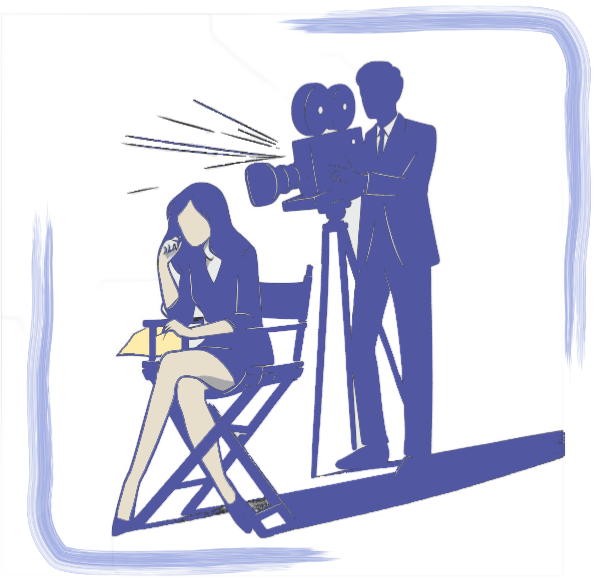
Our subconscious is like the director of a silent film, shaping our life’s narrative without us realising it
At the top of the page, I used a reference from the film, the Matrix: “Reality is a thing of the past.” I hope now that it makes sense in the context of the 7 Skills and how it reflects how your ER is shaped by rules your subconscious learned by age 6. In other words, your reality is shaped by lessons in life learned as a child.
Ananya’s Struggle: The Shackles of Anxiety
Ananya’s panic at the workshop clearly showed how beliefs and Edited Reality can limit anyone in adversity.
She was intelligent and capable. Yet her racing heart and brain freeze were signs of an intense inner battle.
For as long as she could remember, Ananya had suffered criticism and rejection from her mother. This led her to subconsciously believe she “just wasn’t good enough”. She believed that others would find fault in hurtful ways when judged.
Therefore, anytime Ananya was the centre of attention, her subconscious wanted to protect her. Sensing danger, it edited her reality to amplify panic.
At the seminar, when she looked at the blank faces in front of her, she was looking at a group of people who were relieved that they weren’t in her shoes. And who felt sympathy and empathy for her situation.
But that’s not the reality her subconscious mind made for her. It projected the image of a sneering and aggressively critical group.
And so, her anxiety was not just about the task itself but a product of deeply ingrained beliefs that shaped her ER.
Eddard’s Confidence: Wings of Composure
In contrast, Eddard’s beliefs led him to have faith in himself. At his core, he never doubted that he was safe, wanted, respected, or good enough.
At the seminar, Eddard’s subconscious edited his reality so that he would notice opportunity rather than danger. He viewed the challenge as a chance to learn and practice, not as a threat to his safety, belonging or esteem.
Eddard’s remarkable composure in tight corners flowed from this empowering Edited Reality.
I offered Ananya free coaching at the end of that seminar. I’m happy to say she accepted. I coached her through a 7 Skills to impress™ toolkit called ‘Review and Preview’ (R&P). Her confidence and self-belief blossomed. I discuss her background and how R&P transformed her life in the Review and Preview lesson in ‘The Hub”. Click here to go there now.
How To Be Confident?
Now that we have seen how our subconscious shapes our reality through patterns formed in our early years, let’s explore how we can use this understanding to build confidence.
It’s all about your beliefs and the Edited Reality they create for you.
When you unlock the power of your beliefs and take control of your Edited Reality, you give your skills wings and boost your confidence and performance in every area of your life.
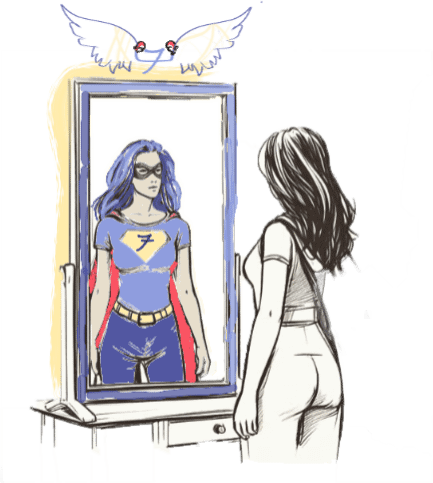
And this is what The 7 Skills to impress™ were built for. By mastering the 7 Skills, you’ll learn to identify and overcome the limiting beliefs holding you back.
The easiest and most engaging way to do this is with our course, ‘Review & Preview’. Check it out here…
You’ll develop the ability to create new beliefs that empower you and inspire you to achieve your goals. And with The 7 Skills to guide you, you can supercharge your progress and achieve success faster than ever.
Take The Quiz For This Chapter
Want to find out how much you’ve learned about tapping into the power of your subconscious mind?
Take the end-of-chapter quiz now and see if you can unlock the secrets to performing at your peak, even under pressure.
This fun, insightful quiz only takes a few minutes and will help guide your journey.
What’s Next?

Returning to the personal challenge I asked you to recall earlier, do you remember the inner conflict you felt?
Considering all we have covered so far, can you see how it was an example of the battle between the part of your brain driven by impulse and that by reason?
Your automatic and emotional brain was thinking fast and may have pushed you towards an instant, gut-driven reaction. In the process, your abilities became limited.
Meanwhile, your slower-thinking, thoughtful and problem-solving side wanted you to slow down and think it through.
So now we review your brain’s two competing control centres and why the instinctive side competes with and tries to override the slower, thoughtful side.
As you hear more about these two parts of your mind – the Monkey Brain and the Computer, you’ll realise why sometimes you may make a bit of a monkey out of yourself!
UP NEXT: Chapter 3.
Who’s in Charge? You or Monkey Brain?
Previous Chapter
Index
Glossary of Terms
References with Summary
References:
- Markus, H. R., & Wurf, E. (1987). The dynamic self-concept: A social psychological perspective. Annual Review of Psychology, 38(1), 299-337.
- Harter, S. (1999). The construction of the self: A developmental perspective. New York: Guilford Press.
- Damon, W., & Hart, D. (1998). Self-understanding in childhood and adolescence. Cambridge University Press.
- Bargh, J. A., & Chartrand, T. L. (1999). The unbearable automaticity of being. American Psychologist, 54(7), 462-479.
- Baumeister, R. F., & Vohs, K. D. (2002). The pursuit of meaningfulness in life. Review of General Psychology, 6(1), 1-19.
- Wegner, D. M. (2002). The illusion of conscious will. Cambridge, MA: MIT Press.