

(Medium Identity Quotient, IDQ)
You’ve met your Alter Ego. Here’s what sits beneath it. The findings below come from the Theory of Identity and Edited Reality, the foundations of Part 1 of The 7 Skills to impress™, told there through real stories and people you’ll know. Here is what your IDQ score is telling you.
A score in the 14 to 17 range is a Medium IDQ. You’re generally confident and more capable than you give yourself credit for. The pattern to know is that under pressure you can be rattled, and you tend to feel less on top of things than you actually appear. Here’s how that looks across the Identity Model.
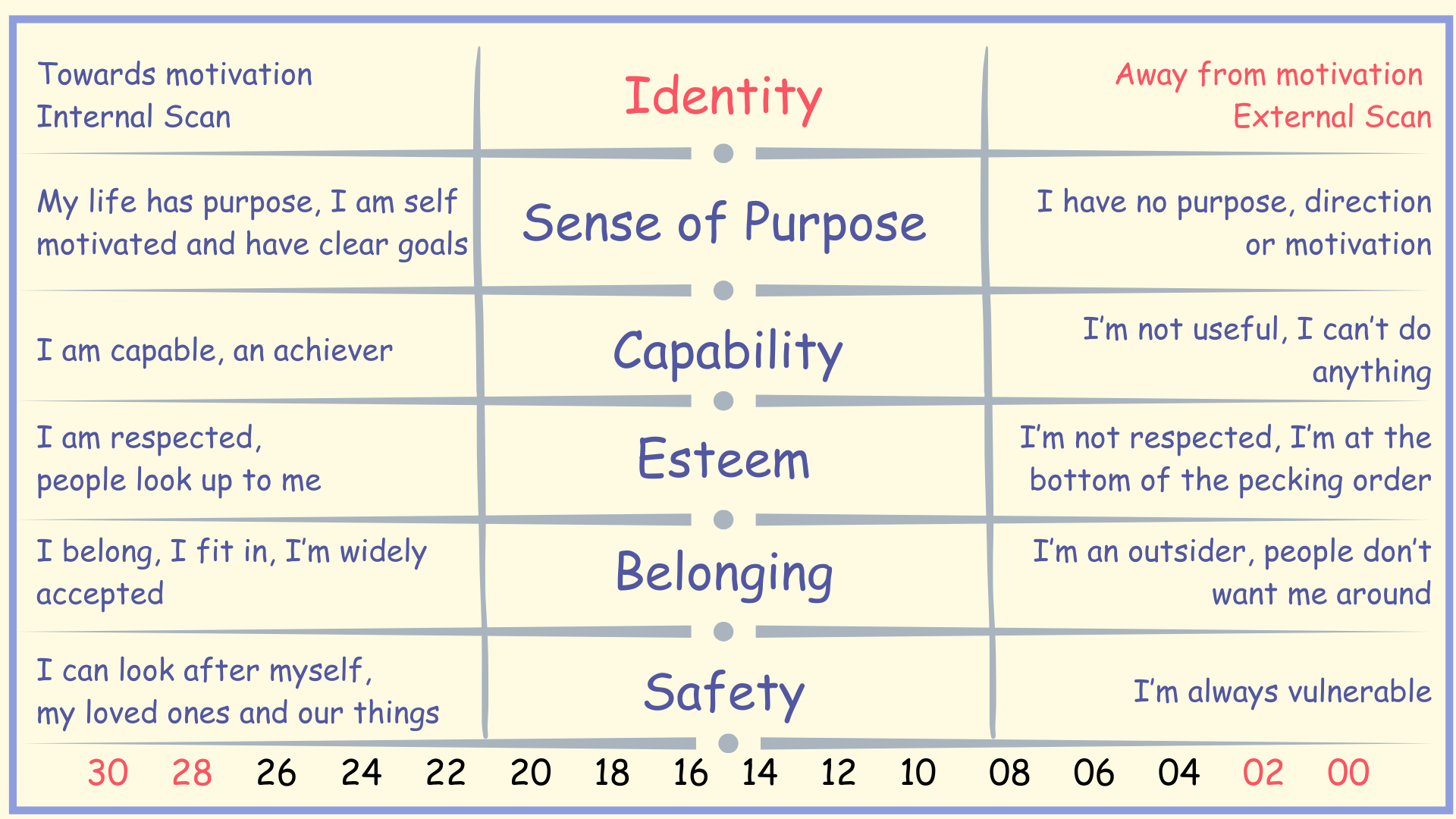
Safety is the foundation, and in calm conditions you generally feel secure. When things feel stretched or disorganised, you start to assume you’re not handling them as well as you should be, and the worry can outrun the reality, which nudges you away from risks you’d usually take.
You enjoy people and you fit in more easily than you feel you do. When your sense of belonging is shaken, you tend to assume others were preferred over you, so you can withdraw at exactly the moments when staying connected would help most.
You carry a fair picture of yourself most of the time. The difficulty is the gap between how competent you look and how unsure you feel inside, so a harmless comment can get taken to heart and the self-doubt sets in faster than it should.
You’re more capable than your own running commentary suggests, and others see it. When your ability is tested, though, you feel that inner gap keenly and brace for falling short, even on things you’d handle well. With a bit of preparation and support you shift quickly into a calmer, more confident state.
You feel the pull to contribute and you know you’ve something to offer. When you’re challenged that belief can waver, but it’s there, and it returns once the pressure eases.
You weigh what others think alongside your own view, which keeps you considerate. Under pressure you can tip towards needing reassurance and lose a little faith in your own instincts, even when they’re sound.
Your default is to move towards sorting a problem out. When stressed you can hesitate and lean towards putting things off or sidestepping anything that feels risky, more than the situation really warrants.
We all pass our state of mind to the people around us, through our words and our manner. This is your Explanatory Style. When you’re relaxed, others experience you as thoughtful, sincere and quietly capable. When you’re rattled, the doubt can show, and a team or a child can feel the uncertainty. This has a big impact, and it often improves quickly as your confidence under pressure grows.
Overall, a Medium IDQ at this end means a capable, well-liked person who underestimates themselves when it counts. The distance between how you come across and how sure you feel is smaller than it seems, and closing it is exactly what shifts a good state into a consistently confident one.
What to do next
Your score says the foundations are there, and it’s clear what would make the biggest difference next. What would change if the confidence others already see in you felt just as real to you when the pressure was on? And what becomes possible when you can read the cues in someone’s language that move them towards yes, and shape your own words to carry more weight?
The 7 Skills to impress™ is the toolkit for exactly that. The Skills make you the person people want to talk to, and they help you find the words that move people, anywhere and any time. Part 1 of the book uncovers how your IDQ develops and how it shapes your life.
It’s free, and we think you’ll find it genuinely useful. Part 1 opens with Three Seconds to Save a Life: Jacqui’s Story.