

(High Identity Quotient, IDQ)
You’ve met your Alter Ego. Here’s what sits beneath it. The findings below come from the Theory of Identity and Edited Reality, the foundation of Part 1 of The 7 Skills to impress™, told there through real stories and people you’ll know. Here is what your IDQ score is telling you.
A score in the 22 to 30 range is a High IDQ, which points to strong self-assurance and resilience. You treat pressure as an opportunity, and you tend to step forward where others hold back. Here’s how that comes through across the Identity Model.
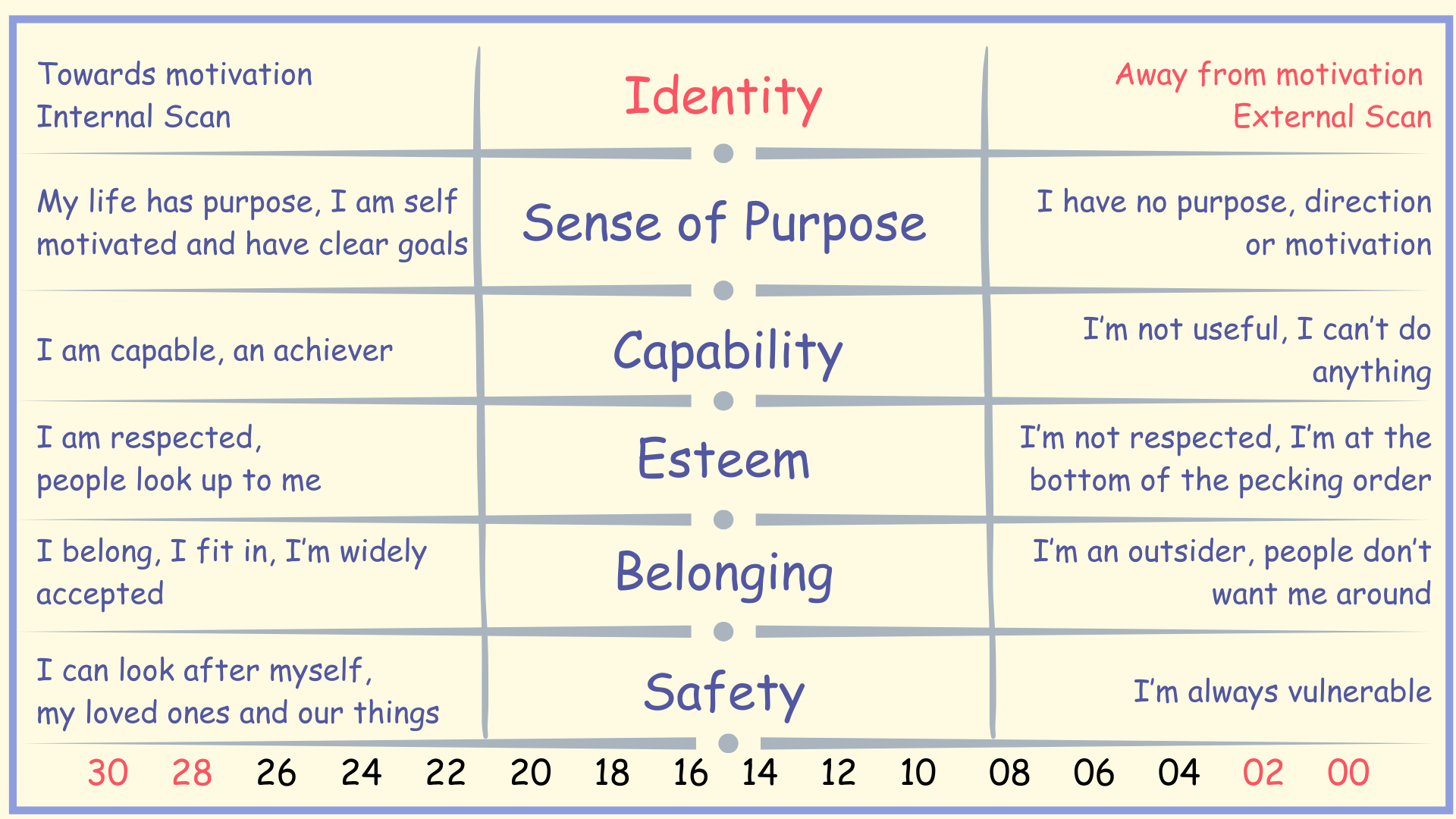
Safety is the foundation, and yours runs deep. You feel secure and composed even when things get difficult, and you tend to spot the solution inside a problem, which lets you take on risk without it rattling you.
You have a strong sense of belonging and rarely worry about being rejected, so social situations feel easy. If relationships become strained or your confidence takes a knock, you tend to recover quickly.
You hold a positive self-image and you don’t let setbacks dent your self-belief for long. Even in hard stretches you keep your inner steadiness and keep self-doubt at arm’s length.
Confidence in your own strengths is a hallmark of where you score. You meet setbacks expecting to deal with them, you trust your ability to handle what comes, and any self-doubt passes quickly.
One thing worth a gentle watch: when belief runs very high, it can start to outrun the evidence. At that point, people may stop feeling inspired by your optimism and start seeing it as unrealistic. So it pays to keep listening for the cautious voice in the room, the one that sees the risks you’ve already edited out.
You believe you’ve something worthwhile to contribute, and it shows. Moments of doubt can surface when stress is high, but you find your Sense of Purpose again quickly and draw meaning from what you do.
You balance self-belief with a willingness to hear others. You trust your instincts, and in difficult times you can take advice on board while staying confident in your own decisions, which is the balance most people are reaching for. Be aware that you may be editing out feedback that doesn’t match your thinking, since that’s the feedback that protects you against overconfidence.
You’re built to move towards problems and to meet challenges with belief and grit. You can also dial up your caution when stress rises, stepping around risks you simply don’t need to take, which is judgement rather than avoidance.
You’re the person others want around when things are hard. Your Explanatory Style, the way your outlook comes out in your words and manner, is steady and uplifting, and when the chips are down you can be relied on to bring the best out of the people near you. This is where a High IDQ does some of its most valuable work, in teams, in clients, and in children.
Overall, a High IDQ gives off a sense of being able to turn bad times around. You meet life with an upbeat outlook, you shine in good times, and in stressful ones your self-belief carries you through, so you take on the tests that come and bring others with you as you do.
At your best, that confidence inspires people. The challenge is making sure your optimism stays connected to reality, because confidence is most powerful when it can see both the opportunity and the risk.
What to do next
How well does the picture above fit you? Your score says you’re set up to reach your full potential. What would it look like to do that consistently? And what becomes possible when you can read the cues in someone’s language that move them towards yes, and structure your own words to be genuinely influential and inspiring?
The 7 Skills to impress™ is the toolkit to take that further. The Skills make you the person people want to talk to, and they help you find the words that move people, anywhere and any time. Part 1 of the book uncovers how your IDQ develops and how it shapes your life.
It’s free, and we think you’ll find it genuinely valuable. Part 1 opens with Three Seconds to Save a Life: Jacqui’s Story.