

(Medium-to-high Identity Quotient, IDQ)
You’ve met your Alter Ego. Here’s the theory underneath it. The findings below come from the Theory of Identity and Edited Reality, the ideas Part 1 of The 7 Skills to impress™ is built on, told there through real stories rather than diagrams. Here is what your IDQ score is telling you.
A score in the 18 to 21 range is a Medium-to-high IDQ, and it’s a strong place to be. In fact it sits in the range the book recommends aiming for. You meet pressure as something you can handle, and your confidence is the grounded kind that grows from experience rather than bold claims. Here’s how it looks across the Identity Model.
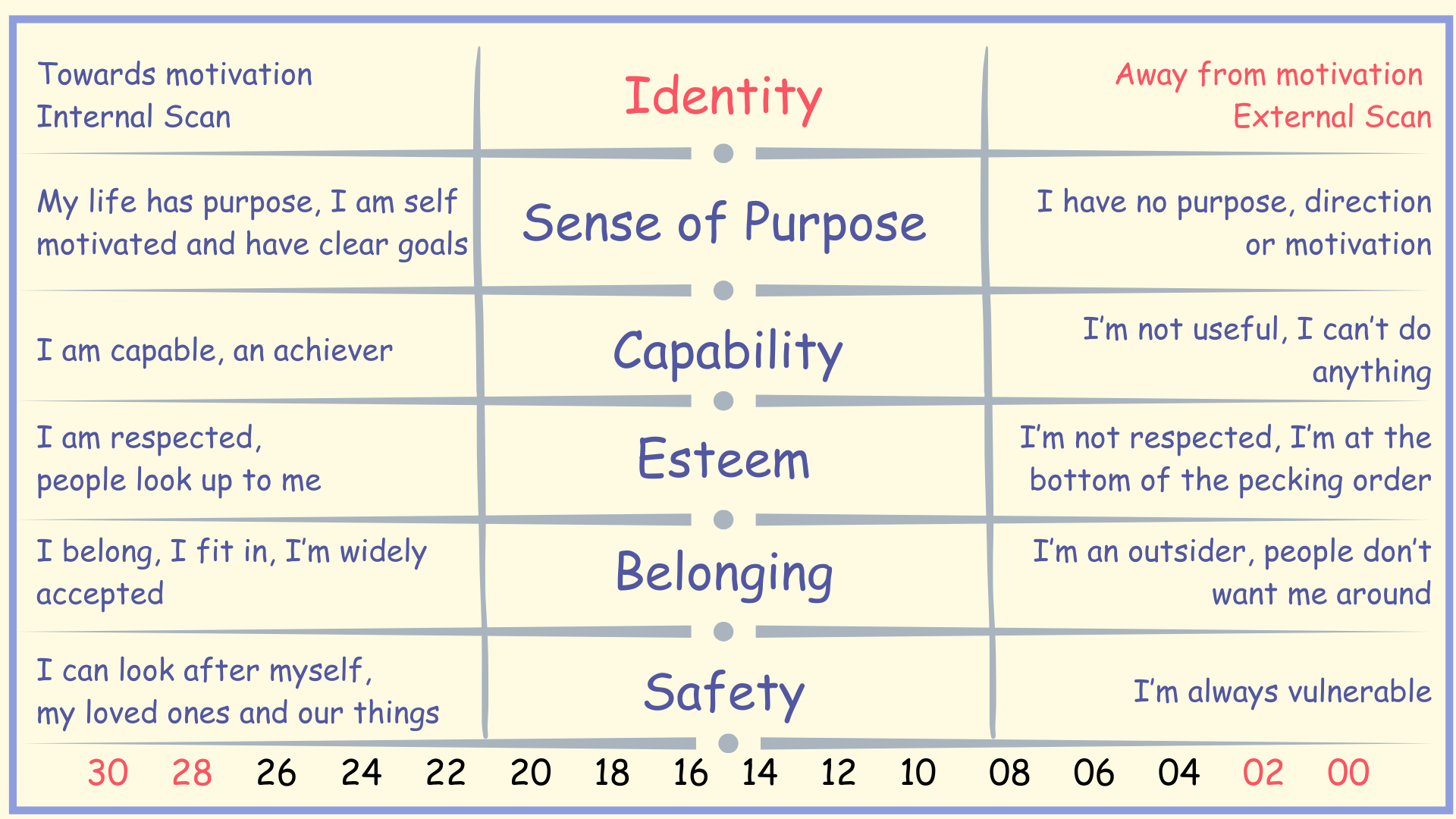
Safety is the base the rest is built on, and yours is solid. You feel secure enough to expect to find a way through, so you take on challenge without it unsettling you. When the stakes are real you become sensibly more careful, which is judgement rather than fear.
You assume you’ll be welcome and you generally are, which is exactly the outlook that builds friendships and networks. A knock to your confidence doesn’t keep you down for long, and you trust your track record to speak for you.
You hold a steady, positive picture of yourself, earned rather than inflated. You don’t take disagreements as verdicts on your worth, so setbacks tend to roll off rather than stick.
You trust what you’ve already proven you can do, and you rely on preparation rather than bravado. That makes you quietly effective and dependable under pressure. The odd setback registers, but it doesn’t shake your belief that you’ll handle what comes.
You feel you’ve something worthwhile to contribute and you act on it. Doubt can surface in a stressful stretch, but you find your Sense of Purpose again quickly and draw real meaning from your work.
You balance self-belief with a genuine willingness to hear others, which is a solid foundation to operate from. You trust your instincts, and you can take advice on board without losing your footing in your own decisions.
You move towards problems and meet them expecting to figure them out. You’ll also raise your caution when stress climbs, sidestepping risks you don’t need to take, which protects you without holding you back.
We all pass our state of mind to the people near us, through our words and our manner. This is your Explanatory Style, and yours is reliable and quietly encouraging. It earns trust precisely because it doesn’t overreach, and the people around you, including children and teams, respond to that quiet reliability. This is where your IDQ does most of its work, often unnoticed.
Overall, a Medium-to-high IDQ is the grounded, capable confidence most people are reaching for. You don’t overclaim, you deliver, and others experience you as someone they can rely on when it matters.
What to do next
How well does the picture above fit you? Your score says you’re set up to reach your full potential. What would it look like to do that consistently, and to add the skill of reading the cues in someone’s language that move them towards yes, then shaping your own words to be genuinely influential?
The 7 Skills to impress™ is the toolkit to take that further. The Skills make you the person people want to talk to, and they help you find the words that move people, anywhere and any time. Part 1 of the book uncovers how your IDQ develops and how it shapes your life.
It’s free, and we think you’ll find it genuinely valuable. Part 1 opens with Three Seconds to Save a Life: Jacqui’s Story.