

Rapport is a vital skill for connecting with people. We need it to build relationships and to inspire and influence. And, Identify Your Outcome and Manage Your State are perfect partners for Rapport.
You’ll remember that how we gain Rapport differs with individuals, groups and in leadership settings (Click here to jump to Leadership Rapport Is Different). But in every case, you are trying to achieve the same thing. Even though your approach will be different.
With Rapport, we are seeking to ensure that the ‘client’ or group feels;
- They are safe with us.
- That they are wanted and respected by us.
When you achieve this, your client will release the feel-good hormone, Oxytocin. Which promotes the trust and confidence that are the building blocks of Rapport.
The Rapport Survey. [coming soon]
We have a great tool for you to practice and test your Rapport skills. Find a volunteer to have a 20-40 minute conversation with. Maybe a friend, family member or colleague.
After the conversation, send them an email with your link in it. It will invite them to take the Rapport questionnaire. They will be asked technical questions that are expressed simply. They won’t know how their feedback relates to your score.
Once they’ve completed it, it will give you a score from 1-12. 1 means not very Rapportful; 12 means as Rapportful as you can possibly be. You can repeat this exercise as many times as you wish.
How I built Rapport with the Rugby Squad and Staff.
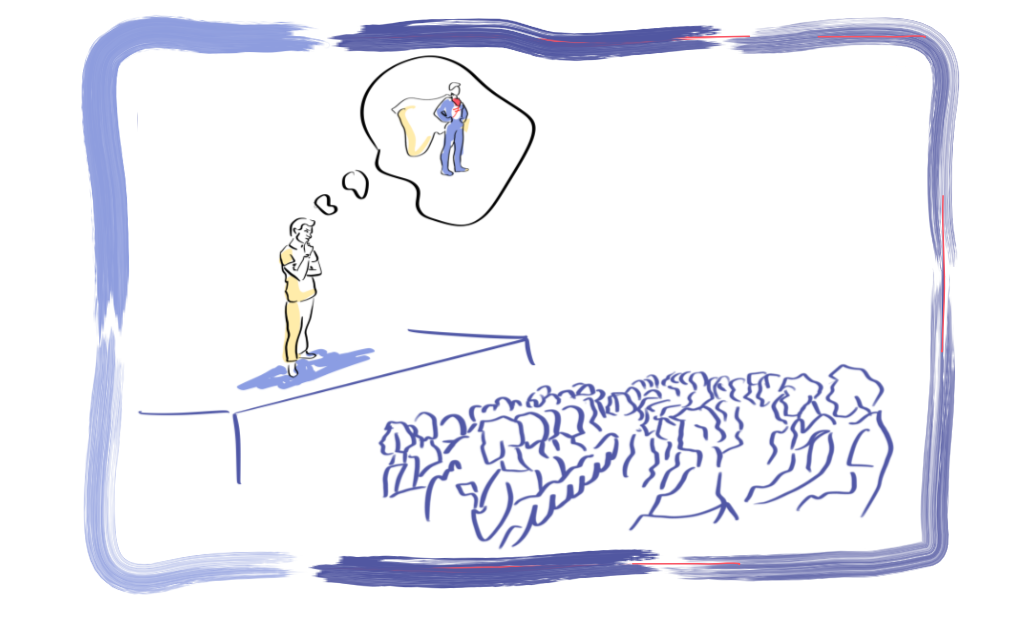
I had one more Outcome that I haven’t mentioned yet. The one for the talk itself. That difference I wanted to make for this team. My purpose, if you like.
We all know that losing teams can get frustrated and angry. They criticise one another and point the finger of blame. I had been briefed that the atmosphere in this squad was like this. And whenever anything went wrong in a game, they started getting at each other, and their heads dropped.
I targeted my talk on making them feel like winners. I wanted to focus their minds on what they were capable of. To see their losses, mistakes and setbacks as fleeting – a blip. And to be sure that their qualities and strengths were lasting and defined who they were – their Identity.
My Outcomes simply were to inspire them to believe;
“We are winners”.
“We can compete with any team in this league”.
I arrived in the club room precisely on time. I’d asked the coach to give me the briefest of introductions and get me on as soon as I walked in. I had been doing HPI all week and had just finished Melt Away in the car park. I was ready and raring to go.
The players had been told about me at the start of the session. They knew I was coming and that I was working with some famous players and coaches. As I walked in, the coach looked over at me and said, “OK, here’s Mark, welcome”. He invited me to the front of the room.
They had just wrapped up a tactical assessment of the last game. The mood was a little down as the review focused on their errors. The setting was similar to how I had it in my thoughts during my HPI work. The main difference was that I stood behind a table in front of the players.
I had my notebook with me with some prompts in it. But I couldn’t read them because I’d decided not to wear my glasses. So I slapped it on the table in frustration. It made a loud sound, which accidentally worked quite well for me. Suddenly, everyone looked up, and their eyes were on me.
I went straight into my opening line;
“Good Evening, it’s good to be here, thanks for the invite to talk with you. I have a question for you, why should the teams in this league fear you?”
I paused – silence! All the faces were staring at me, and no one was speaking. I knew they were working out if I’d asked an open question or if I was insulting them. After all, they were on a losing streak, so I might have been rubbishing them.
I didn’t leave the silence hanging for long. I already had their attention. But after a while, those who figured I was dismissive would be getting worked up, and I’d pretty soon lose the room.
So I said;
“Look, I’ve watched the videos of your matches. You start slowly but then compete as equals. You’d win every game if you took out the first 15 minutes.
“Sport at this level is all about pressure. And starting slowly puts you under pressure. I always say that under no pressure, an ordinary team can look world-class, but pressure can make a world-class team look ordinary.
And small things can make big differences. A good tackle, a slick pass, an incisive run or a defence-splitting kick, and suddenly you’re on top.
So what skills have you got to make that happen; to put your opponents under pressure. What are your strengths? What talents are there in this squad you are thankful for? Why should the opposition fear you?
Still, nobody spoke, but the energy in the room was a little more upbeat. They had all been focused on their mistakes in the tactical review. Now they were beginning to wrap their minds around more positive ideas.
I knew what to do next to get the ball rolling. I pointed to one of the younger squad members. On videos, I’d seen that he had scorching pace. I said;
“So, tell me three qualities this lad has that you’re grateful for as a squad?”
They were loyal to their young teammate and wanted to tell me what he could do. Voices started to call out, “he’s the fastest sprinter in the league”, “he’s deceptively strong”, “he’s got a killer side step”.
I pointed to another player.
“And this guy here, what does he bring to your squad?
By the time I had done this with four or five of the players, everyone was shouting out. After I had done this with ten or eleven of the squad, I was concerned it might get repetitive. So I summarised the SQAs they’d been giving me. And then I shouted out;
” OK, what’s missing. what else is there I haven’t heard?”
The whole group were fully engaged with me now. Animated as they told me about their skills, qualities and attributes. Now they were fully immersed in what they could do on the rugby pitch, not what they’d been getting wrong. The energy in the room had transformed.
I kept this going for about ten minutes. We’d started in silence, and the talk had brought them to a raucous head. They were talking with me like they trusted me. I could tell we had a connection. I felt this was the Rapport I needed to get them to accept my prepared words.
So I lowered my tone of voice a little and began my ‘inspirational’ speech.
“Note how important Outcomes and State were to me…
…and how Skills 1 and 2 of impress™ dovetail with Skill 3, Practice Rapport. They are so powerful together, and it’s natural to combine them. They boost your performance under pressure and shape your thinking to make you naturally inspirational.
Up Next: Skill 4: analysing The Language of Stars.
We’ll analyse the language of Mohammed Ali, Le Bron James and Leonardo de Caprio and reveal their Persuasion Pathways. Click here.