
In this chapter, you’ll discover how to inspire your children to develop a sense of purpose. Simple everyday activities will unlock your kids’ curiosity. They will become more lively and engaged. You’ll see how to lift their vision to see the big picture.
Here you’ll find many practical tips for family bonding and nurturing presence, curiosity and interest in the world. You’ll learn helpful tips to limit screen time and use rewards healthily.
Whether starting these habits early or breaking ingrained patterns, read on.
Michael’s Zombie Children Develop A Sense Of Purpose
Every weekend, my friend Michael, his wife and two children drove to visit his mother. But the thirty-minute journey had become a chore. Everyone either stared at screens or lost themselves in their own thoughts. No one spoke.
Michael and his partner, Kali, worried about how flat and distant the family were when they arrived. Things were becoming the same at home. Michael decided he had to improve the situation.

One day, on the way to his mother’s, they became stuck in traffic at road works. Michael muttered just loud enough for everyone to hear, “I wonder what’s going on here?”
His kids were only too happy to show they knew something Dad didn’t. Eagerly, his children explained why they thought the road was being dug up.
Michael realised this was his opportunity. He leapt on their engagement and used Rapport skills to draw them out and keep them talking. Soon the children were chatting happily about the road works.
As they continued the journey, Michael’s questions kept the chat going. They discussed the purpose of the work, who paid for it, and who benefited or was inconvenienced.
Michael and Kali were pleasantly surprised at how this tactic got their children talking. They conversed for the whole 30 minutes. Somehow, everyone felt closer and more alive when they arrived.
The road work was completed a week later. But soon, that stretch was being dug up again to fix water pipes, apparently cracked during the original job. This sparked more discussions about the issues and expenses created.
Michael knew this was a chance to break the mould and create a vibrant family atmosphere. Every trip, he had an idea in his mind to start a conversation.
After a while, the children often initiate conversations about things they saw en route. Michael and Kali used these moments to engage them.
They began to see positive changes in their children. They seemed more alive, connected and present. Excited about how good this was for the family, they decided to create this change in other areas of their family life.
Healthy Habits

The earlier you start instilling healthy habits, the easier it will be. Children gain lifelong mental and physical benefits if they embed positive lifestyle patterns early.
If habits have already set in, change can be tricky. To stay on track:
- Begin with an Outcome and Realisation. Focus on the value you’ll add to your children’s lives.
- Don’t forget to Manage Your State when challenges arise.
The big difference you want is for your children to be more active and present. Get them out of chairs, away from screens. Exercise their bodies and minds. Help them engage the real world with curiosity and focus.
This will reduce their risk of obesity, poor mental health, and a dulled mind.
Remember that any struggles you face are fleeting …
.. and you have all the skills you need to achieve this. Any resistance you face is Other. If it gets tricky, weave these challenges into your Review and Preview. It will make such a difference!
In either case, loads of Rapport will be needed. As well as exciting activities. And there are plenty of suggestions for these below to get you started.
To begin with, we’ll look at some ideas on healthy screen use.
Healthy Screen Time is a tricky issue …
Healthy, Balanced Screen Time

We live in a digital age, and children want to fit in with their peers. Much of their culture and friendships involve being on screen and online.
And it all starts with the example you set. Remember what I said in Rule 1: Prepare Yourself?. Here’s a reminder;
Building an High IDQ in your child is a challenge… It’s not something you do to them. You have to live it yourself, be the change you want to create, and they’ll learn it from you.
five rules for Inspirational Parenting: Rule 1
Clearly, this is just as true for screen time. So when you look at the tips and ideas below, set a good example with your screen use. Consider what changes you could make to be the model you want to set.
To begin with…
… the screen time your child enjoys must be healthy and well-balanced. So have a look at the questions below. How many can you say “yes” to?;
Is my child;

- Physically healthy?
- Engaged with school?
- Having fun and learning while using screens?
- Sleeping enough?
- Using quality content?
- Enjoying a variety of hobbies and interests?
- Doing physical activity every day?
- Enjoying quality social time with family and friends, online and offline?
The idea is for your children to tick all of these boxes. And, remembering what I said above – you too!
I did some research for recommended lengths of screen time…
And I found a lot of agreement around the following tips;
- Until 18 months of age, limit screen use to video chatting along with an adult (for example, with a parent who is out of town).
- Between 18 and 24 months, screen time should be limited to watching educational programming with a caregiver.
- For children 2-5, limit non-educational screen time to about 1 hour per weekday and 3 hours on weekends.
- For ages 6 and older, encourage healthy habits and limit activities that include screens.
- Turn off all screens during family meals and outings.
- Learn about and use parental controls.
- Don’t use screens as a reward.
- Avoid using screens as pacifiers, babysitters, or to stop tantrums.
- Turn off screens and remove them from bedrooms 30-60 minutes before bedtime.
- No screens in the morning before school or for the first 30-60 minutes at weekends.
If this information suggests some gaps need filling for you and your child, it’s time to take action.
I know this is my book, and I’m meant to act as if I’m the source of everything you need to know. But here’s an article I found online that I thought was excellent, and I couldn’t improve upon it. So I decided to share it because I think it will be really helpful for you:
At Your Wits’ End With A Screen-Obsessed Kid? Read This
Curiosity, Interest And The Big Picture
The tips on Rapport in Rule 2 of Inspiring Parents will be handy. The suggestions for activities from the Quality Time Myth page are not just brilliant for Rapport. They all work at generating healthy, enquiring and curious minds.
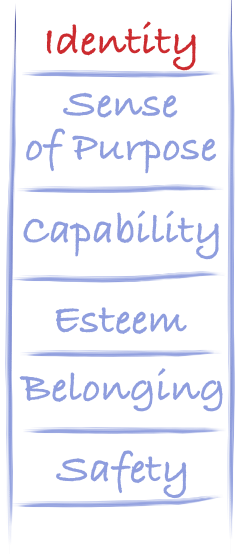
Each of the ideas I discuss below encourages family bonding. And by engaging with your children in this way, you create a sense of safety, belonging and self esteem. As you know, these are the core elements of a High IDQ.
Read To, And With, Your Children
Simply reading to and with your children unlocks some priceless benefits. It can help to create a strong lifetime bond between parent and child. It boosts the areas of the brain they use to think, read, learn, remember, reason, and pay attention.

- The benefits of reading together begin with the bond and empathy that family members feel for each other. They talk with each other more. This closeness opens a child’s mind to your influence as you guide and coach their developing sense of purpose.
- Reading develops ideas and interests they’ll take along for the rest of their lives. It opens their minds to the broader world.
- Reading boosts a child’s ability to picture ideas in their mind, problem-solve, and understand. They can better express their thoughts and do maths.
- Imagination is sparked by reading. It helps a child to picture people, places, times, and events they haven’t yet come across.
- Reading helps children build personal strengths, such as self-control, focus, and memory. Of course, these will help them do better at school.
- And, with all the above gains, reading builds self-belief.
These benefits are linked to how often a child reads or has been read to. It is a wonder that such a simple thing as reading can offer so much. So, it makes sense to build it into a routine and make it something you all enjoy together.
You could mix it up a little to boost the benefits. Maybe add some open-ended stories and ask your children to finish them off. Perhaps you could change something in a story they know and ask … “what if?”
So employ reading to get away from screens and develop the skills that underpin a sense of purpose.
Observe And Respond To Their interests

Leap on anything they show an interest in. Use the Rapport building tools and get them talking.
We all have different interests and are more ready to look into things we like. So when you notice something they are already keen on, it’s easier to develop their sense of curiosity.
Ask Questions
(Remember Rapport!)
Good questions get a child’s mind working. They’ll think about the world and make connections, becoming more present. And their reasoning and thinking skills will grow.
This type of activity implies safety, belonging and respect. In this way, they are a big step on your child’s High IDQ journey.
Here are some ideas for questions to get your brilliant conversations started;
- “What makes a good friend, and do you think you are one?”
- “If you could visit anywhere in the world, where would you go, and why?”
- Talk about inventions that led to big changes in living memory and are now taken for granted. E.g. laptop computing, cheap air travel, microwave ovens (well, I can remember life before microwaves, haha), music streaming, video streaming, the internet, good quality cameras in a phone, smartphones.
- Discuss how life would change if we suddenly had to do without them. (I recently had my phone and internet mistakenly switched off for 48 hrs. I get my TV and music from my computer, and all my work is on a computer. I was amazed at how I couldn’t do so many things I take for granted. Emails, writing, blogging, filming, reading or watching the news, TV, listening to music. I had no messages or calls from friends or family. In the evenings, I could only read books! It was a revealing blast from the past.)
- Ask what inventions people will take for granted in the future but are hard to imagine today.
- “What superpowers would they love to have and why?”
Answer Their Questions

Be prepared to show interest in your children’s questions and answer them. When you do, you engage with their growing minds. Chatting about them will foster curiosity and imagination.
This plays a big part in letting them know that they are worthy of your time and interest. Again, a building block for your child’s future High IDQ.
Children are always asking questions, and it can be very frustrating. So, remember and use Skill 2 of The 7 Skills to impress ‘Manage Your State’. It’s all too easy for busy parents and carers to find it a bother.
But if you don’t engage and get on with ‘more important stuff” instead, you’ll send your child the message that they are not important to you. Many a Low Score Identity started this way.
And yet, there will be times when you are too busy, so be careful how you handle these moments. Make sure the child knows you want to answer, that you can’t right now, and that’s a shame.
And then return to the point when you can. Even if the moment has passed for them, you’re showing that your child matters to you.
Children must know that sometimes a parent must focus their mind somewhere else. That they are not the only living thing in the Universe.
Even when you put them off, handle it right, and they will get the message that they are important to you. They will develop a secure, balanced and unselfish idea of their place in your life.
And Help Them Answer Their Questions
It’s a good idea for a parent to help a child work things out for themselves.
A parent can say, “Wow, that’s a good question. What answers are you thinking of?” Then, your role is to guide them to work it out.
Suppose it is a question that has already been answered before. In that case, a parent can encourage a child to remember the answer.
Explore and Discover
Encourage children to notice what’s happening around them and be curious. This is a state of mind. Talk about what you see on any car journey, walk, bike ride, etc.
Look out for anything to open a discussion around, such as;
- People at work, at play or just around and about.
- Nature, pets and animals.
- The roads, paths, streams, canals and rivers you use or pass.
- Anything that has changed.
- Take different routes for a journey you do regularly to change what’s going on around you.
- Traffic, roadworks, street furniture.
Prepare Food together

Seed the idea of where their food comes from and how it’s made. And how different food groups help or hinder health and growth.
- Bake a cake or a loaf together.
- Measure out the ingredients for a pancake mix and stir them all together.
- Read cooking instructions and follow them.
- Discuss sugar, protein, veggies and carbs. What happens to them when they are digested, and their purpose in health and growth. Read the ingredients on food packaging and spot the hidden surprises, e.g. high sugar content.
Projects such as these help children learn skills for school and life. They help with maths and reading skills. Word usage is also given a boost.
Little puzzles to solve crop up in following a recipe. This creates an opening to promote problem-solving skills and confidence.
And prepping food trains the small muscle groups in the hands and wrists and improves hand-to-eye coordination. So, surprisingly, cooking can help with art and sports skills.
They learn to be present and in the moment when putting a meal together. It builds a child’s ability to focus and pay attention. And if the belief that they can feed their family starts to grow, so will a sense of confidence, independence and purpose.
Encourage your children to study music
This is another idea that has surprising benefits.
Playing and learning music is a complete workout for the brain. It works every single part of the grey matter. Other popular brain training games like chess or sudoku can’t match it for recruiting all the senses. And it works fine motor movements, such as fingers.
Music increases the links between the brain’s right side and left side. And so music helps with learning, memory, creativity and solving problems.
Teach Them Newton’s Law of Debate

For every point of view in the Universe, there is an equal and opposite point of view.
OK, this is a play on Newton’s Third Law of Motion, and I made it up. But it’s a really important idea and I firmly believe in it. And more than that, it’s a vital concept to teach our children.
Newton’s Law of Debate will help your children deal with conflicting advice and ideas and make good decisions in their lives.
The Wisdom of Crowds
The idea of Newton’s Law of Debate first came to me when I read James Surowiecki’s book, ‘The Wisdom of Crowds’. He talked about what happens when people try to guess the number of marbles in a jar.
It turns out that the more people to take a shot, the closer the average guess is to the actual number of marbles.
Even though no individual may get it right.

The collective wisdom of all the people taking a guess leads to the most useful conclusion.
Some scientists believe this ‘Wisdom of the Crowds’ notion is one of the survival hacks of the Human Race. The pooling of ideas and opinions has helped humans reach better decisions throughout our history.
And that was not the only exciting conclusion from Surowiecki’s research
The other is why the average guess could sometimes be way out. Two of his key findings are of interest to us here;
- When the guessers knew what others had said before them, accuracy dropped. People feel safer following what had been said before. Their purpose is overtaken by groupthink.
- All guesses, even the wild ones, had to be included. Say there were 10,000 marbles in the jar. Someone may guess 10 marbles, another 10 million. Either of these guesses is wildly wrong. But suppose you rule out one of the absurd responses. In that case, the other wild estimates shifts the centre ground towards the opposite extreme. But leave them all in, and they tend to cancel each other out, allowing the average to be as spot-on as possible.
This marble experiment is a helpful model for how we can equip our children to make good decisions throughout their lives, and two pitfalls to protect them against;
- Dominance Debaters
- Confirmation Bias
There will always be people who want to dominate a discussion…
.. and believe that their point of view is superior to any other.
Some people dominate the conversation in debates, scorning differing views. However, it’s important to remember there is always more than one reasonable way of looking at anything.
When people insist only their viewpoint is valid, it limits collective wisdom. Their narrow thinking causes them to overlook useful insights from other ideas.
We gain a more balanced understanding by staying open-minded and considering different angles.
Confirmation bias can also lead us to follow those who share our beliefs, even if there are likely flaws in their ideas. This, too, holds us back from exploring the most helpful lines of thought.
On the other hand, successful people and healthy minds are flexible. They make better decisions because they can think through all angles of an issue.
Kids need to practice listening to different views – even ones they disagree with. Questioning opinions, rather than just accepting agreeable ones, is also a useful skill.
Doing this makes children better informed, more adaptable, and wiser decision-makers.
Here are some tips:
- Pick non-controversial topics to discuss as a family. Form an opinion, then ask your kids to think of what a reasonable person who disagrees might say.
- When watching shows or reading stories, talk about the different perspectives of the characters. Ask your kids how someone else might see the situation.
- During family debates, have each person summarize an opposing viewpoint before stating their own.
- Point out times when you yourself change your mind based on new information. Show how listening leads to wisdom.
- Praise your children when they consider different angles or change opinions in light of new facts.
Keeping an open, flexible mind will serve kids well throughout life. Show them how weighing all views leads to better choices.
Be Prepared!
Having a prepared approach will increase your success…
- Always begin with building Rapport. Resistance is a sign of a lack of Rapport. In the beginning, Rapport itself is your focus. Nothing will be achieved without it. It is a goal in itself.
- Explore every activity, notion and idea from as many perspectives as possible. E.g. if your talking about workmen digging a hole in the road, discuss the points of view of;
- The workers
- Their employers, the local authority.
- The users, e.g. car drivers, homes without water etc.
- Other road users.
- Ask family members to take up a role, e.g., worker, employer, resident, or driver, and give a perspective from each position.
- Whenever possible, ‘chunk up’ your chat to the bigger picture. Ask, ‘whats the point/purpose’, etc. For example, why might the workmen be digging up the road, what’s their purpose, who does it affect, for the better, the worse etc.?

Encourage your children to be present and interested in the world around them. Creating a healthy screen time balance may be a struggle in this modern world, but it is a fight worth winning.
Nurture their openness and curiosity. Develop their ability to see different points of view. Widen their vision so they see the ‘big picture’. Avoid rewards that hijack their natural desire to work for the good of their “tribe”.
You can do this with simple family conversations and activities that forge and strengthen lifelong bonds.
And while you’re doing this, you are laying the foundations for your child’s High IDQ.
Up Next: Rule 5, Teach Your Child The Future Is Important
As a parent, have you considered what kind of future you want for your child? What career, relationships, and life would you love to see them build?
Envisioning a bright future for our kids is natural. But how can we guide them to make choices today that lead to that tomorrow?
This article reveals how to develop your child’s ability to consider long-term consequences. Teach them to shift their focus from short-term thrills and weigh decisions against their future dreams.
You’ll get tips to spark their imagination about the life ahead. And to build the skills and self-belief now that make those dreams achievable.
Research shows kids who envision a meaningful future make wiser choices. They avoid risks and embrace habits that propel them forward.
It’s never too soon to paint a picture of the bright destinations your child can reach. Instil the compass within to chart their course. The future belongs to those who can see it clearly.
Previous Chapter: Rule 4 Part 1: Give Children A Sense of Purpose
The 5 Rules for Inspirational Parenting Index
Reference
Screen Time and Children. https://www2.aacap.org/AACAP/Families_and_Youth/Facts_for_Families/FFF-Guide/Children-And-Watching-TV-054.aspx