Driven: Why Success Never Feels Like “Enough”
What drives David Goggins, Gordon Ramsay and Steven Bartlett: and why success may never feel like enough
David Goggins has run ultramarathons on broken feet, smashed the world record for pull-ups, and trains for hours before most people are out of bed. He has been described as the toughest man alive.
And yet if you listen closely to how he talks about all of it, something surprising appears: none of the achievements seem to satisfy that drive. No success feels like enough, and every setback seems to confirm the doubts he has held about himself all along.
He is not alone. Gordon Ramsay has accumulated Michelin stars, a global restaurant empire and a television career that spans decades. Steven Bartlett became the youngest Dragon in the history of Dragons’ Den at twenty-eight. All three speak, with striking candour, about how achievement never delivers the satisfaction they expected.
I’ve coached many people who carry this same pattern. They didn’t come to me at the height of their success. They came exhausted and burned out, having achieved more than they once thought possible, and still not feeling what they expected to feel. The success had never closed the gap.
Looking at all three through a 7 Skills lens, the same pattern surfaces each time. Something built early in life quietly shaped how each of them sees themselves. It runs beneath the surface. The 7 Skills framework calls it a Sacred Flaw.
The Pattern: Success Built on a Sacred Flaw

In the 7 Skills work, a Sacred Flaw is the deep Identity belief that sits underneath our reflex thoughts and behaviour. Drill down far enough, and for most people it looks something like:
“Deep down, I fear I’m not good enough.”
That belief shapes what the framework calls your Edited Reality: the way System 1 filters events through the lens of Safety, Belonging, Esteem, and Capability.
When “I’m not good enough” sits at the centre of Identity, wins feel temporary and external. No victory feels like validation. Every stumble confirms what the Sacred Flaw has always said.
In the language of the framework’s Persuasion Pathways, this is an Away From motivator. The person is not moving Towards something they have chosen. They are running from something they believe about themselves. The difficulty with Away From motivation is that it never lets you arrive.
You can spend enormous energy moving away from the threat and still never find the security you were chasing, because the source of that fear is not out there in the world. It’s in your Identity.
Goggins, Ramsay and Bartlett all show this pattern. I admire all three of these men, and reading their histories through this lens, I find myself genuinely concerned for each of them.
Burnout is not inevitable for any of them, but it is a real risk when achievement is the only tool available for silencing a belief that lives in your own Identity.
David Goggins: Replacing the Sacred Flaw with a Navy SEAL
David Goggins’ early life reads like a case study in how Sacred Flaws form.
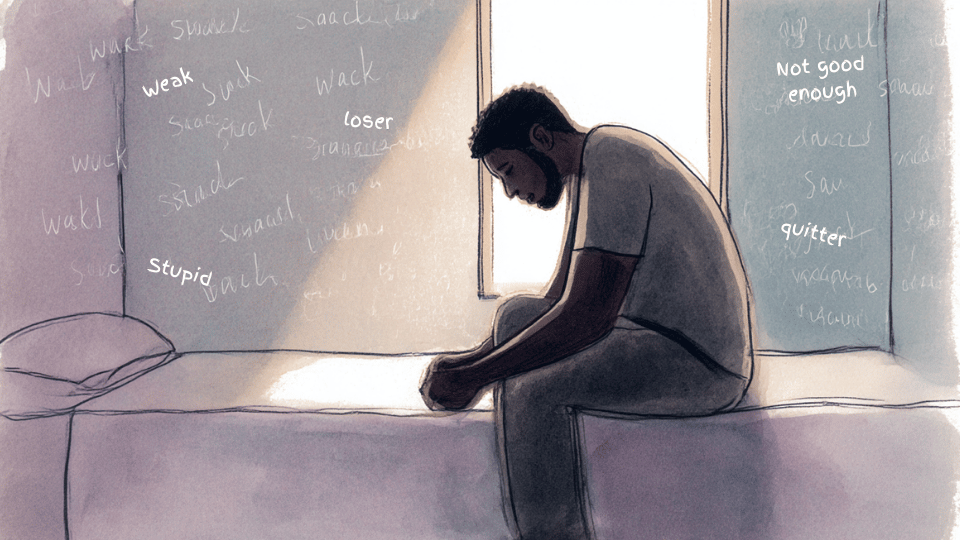
He talks openly about an abusive, alcoholic father who beat the family if their roller-rink business fell short of his standards. As a child, Goggins worked late nights and arrived at school exhausted and distracted. He was held back a grade, labelled slow, stuttered through lessons, and was humiliated in front of classmates. He faced overt racism, slurs and threats. Someone drew a noose in his school workbook.
Put that through the Identity framework and you can almost hear the belief forming: I’m weak. I’m stupid. I don’t belong. I’m not good enough. Goggins confirms this himself. In later interviews he describes not a secret superhero waiting to emerge, but “a f*cked-up kid, depressed and insecure and scared of shit.”
At his lowest, he is a three-hundred-pound cockroach exterminator, hiding from his past and from life. Then he sees a documentary on Navy SEALs. These are his own words:
“My bright idea was to try to become the one thing I was afraid of, a Navy SEAL.”
That decision is not simply about a career. It is an Identity reset and, critically, an Away From choice: become the opposite of what I fear I am. He crashes from nearly three hundred pounds to qualifying weight in three months, passes the tests, survives multiple Hell Weeks, and earns his trident with Class 235.
For the first time, he has an external label that directly contradicts his Sacred Flaw. Before: you’re weak, stupid, nothing. Now: you’re a Navy SEAL.
For a while, the trident works. But it cannot ease what drove him to earn it.
Once he leaves the Teams, the need for proof, never truly vanquished, comes back to drive him on. He becomes an ultramarathon runner, a world-record pull-up holder, the man internet bios describe as “the toughest man alive.” He explains his own logic:
“I found drive in my own insecurities. I had to use all this negative shit that was making me weak as the power that now fuels me.”
This is Away From motivation in plain sight. He is not running towards confidence and contentment. He is running away from the image of the weak, inadequate kid.
Every achievement is another attempt to put that version of himself further behind him. But because the Sacred Flaw lives inside his Identity, it’s always there, colouring everything he sees.

In the language of the Elevate Formula, his strengths and achievements, SEAL, athlete, speaker, remain Other, Narrow and Fleeting. His Sacred Flaw sits at the centre of Self, Lasting and Broad. The achievement never answers the question “Am I good enough?” It just raises the bar. So he keeps trying to prove himself, day after day.
Gordon Ramsay: Michelin Stars Can’t Light the Darkness
Where Goggins found his identity in a SEAL trident, Gordon Ramsay found his in Michelin stars. The vehicle is different, but he driver is the same.
He describes his father as “less than a perfect role model,” an alcoholic who was emotionally and physically abusive, a man who terrorised his mother to the point she feared for her life.
The family moved through more than a dozen homes. Poverty and chaos were constants. Young Gordon watched his father “ruin his life through alcohol” and take it out on everyone around him.
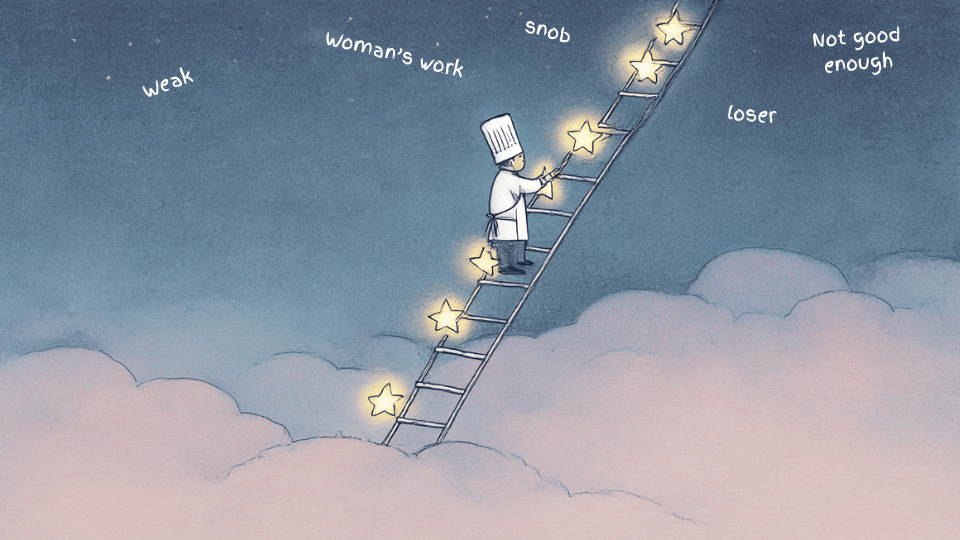
When he finally found something he loved, cooking, his father mocked it as “women’s work” and called him a snob for wanting more.
Run those threads through the Identity lens and the Edited Reality takes shape:
“I’m not the son he wants. My ambitions are ridiculous. If I fail, it reflects on my worth.”
His dream to play professional football (soccer) didn’t work out. He ended up in kitchens, then in Paris, then chasing stars. He called working under Guy Savoy “the dream job” and embraced the intensity of fighting for that third Michelin star.
Television gave him a global platform, and he uses it to broadcast his mastery of the kitchen. The stars are the point. Television exists, in large part, to put that mastery in front of the world.
That Identity does several things at once. It carries high status within a demanding, hard-to-impress tribe. It is externally verified by the guide, the critics, the peers. And it directly contradicts his father’s verdict: cooking as women’s work, ambition as snobbery. For as long as the stars are there, the old whisper quietens.
But this is the core problem with Away From motivation. Michelin stars are not a destination Ramsay has chosen because they bring him satisfaction. They are a shield. They may put his father’s verdict to the back of his mind, but the trouble is that no external award can silence a belief that sits inside your own Identity.
Stars can be lost. Restaurants can fail. And every time that thought crosses his mind, the Sacred Flaw stirs again.
Even after assembling a global empire, Ramsay speaks about still wanting a third Michelin star in France as a late-career swan song. His recent opening of five restaurants at Bishopsgate tells the same story.
The ambition isn’t quenched as achievements accumulate. It expands, each new venture raising the stakes again, as if the next challenge might finally do what the last one couldn’t.
He describes the pressure of maintaining standards, the fear of slipping, the difficulty of switching off. This is the sound of Away From motivation still running: the threat has never fully gone, because the threat was never really external.
What stands out is that none of this has been enough. An empire that most chefs could not imagine has assembled around him, and still he speaks of standards slipping, of one more star he hasn’t yet earned.
The Elevate Formula clarifies what is happening beneath the surface. Gordon Ramsay’s Sacred Flaw is treated by his subconscious as Lasting and Self. Successes remain Fleeting and Other. The Sacred Flaw still murmurs: let your guard down and you will be exposed for what you really are.
Steven Bartlett: Youngest Dragon in the Den
Steven Bartlett’s story looks very different on the surface, but the pattern underneath is the same.
He grew up the youngest of four, with a Nigerian mother and English father, in what he describes as a difficult, unstable, often tense home. He navigated racism, financial stress, and a persistent feeling of not truly belonging.
He talks about parents who at times felt emotionally unavailable, and a complicated relationship with his father. Losing touch with him left Bartlett feeling he had lost “the version of myself that felt safe.”
That phrase is worth reflecting on. In the 7 Skills Identity Model, the foundation level is Safety. When that level is not fully formed, the levels built on top of it, Belonging, Esteem, Capability, remain fragile. This isn’t unique to Bartlett.
An abusive, alcoholic home does not allow Safety to form. Neither does a violent father who terrorises the family and mocks your ambitions. All three of these men had childhoods that denied them the chance to build that foundation securely.
The Sacred Flaws that followed, Away From motivation, achievements that never satisfy, are what happens when the base of the Identity model is missing.
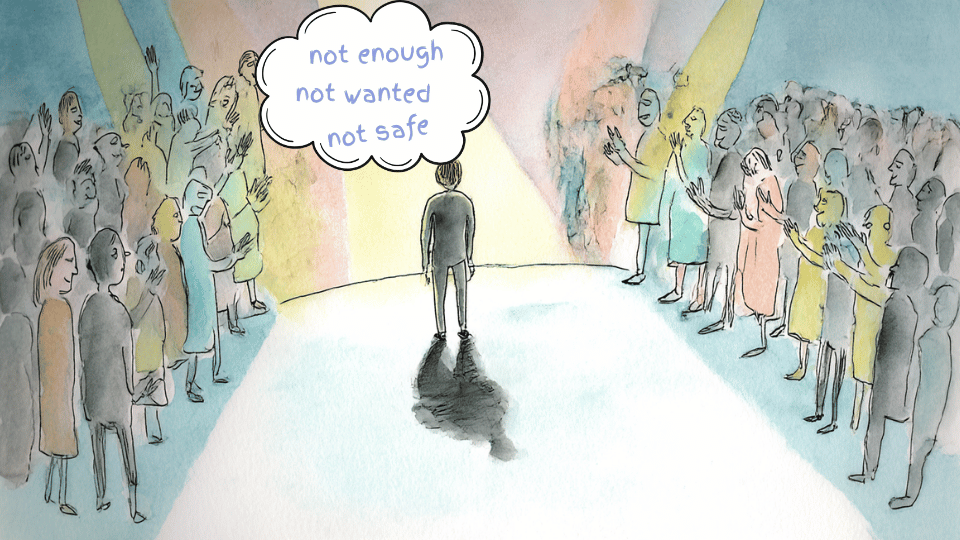
For Bartlett, the Sacred Flaw may be more layered than the “not good enough” I most often encounter in my work. The murmur beneath his behaviour sounds like several beliefs at once:
“I’m not safe. I’m not wanted. I’m not good enough.”
He essentially confirms this when he reflects that his early ambitions “weren’t really ambition, they were insecurity.” That is not a goal-oriented statement. It is Away From motivation speaking.
The first external label that changes how he feels about himself is “successful founder.” Media profiles repeat the line: university dropout who built Social Chain into a multi-million-pound company, then exited. For a boy who felt perpetually on the outside, it is a clean story: you belong because you built something big.
Then comes the big profile. The BBC and his own site note it precisely: “At just 28, Steven makes history as the youngest ever Dragon.” The establishment platform, the chair in the Den, the title that says you are the real deal. For a while, that Identity does what external identities do. It feels like enough.
Very quickly, though, Bartlett is telling his podcast audience something that sounds as much like autobiography as philosophy:
“External validation will never actually validate you. No career, result, salary or relationship will ever give you the validation you’re seeking. Self-worth is an inside job.”
He has the founder story, the Dragon’s Den chair, the hit podcast, the bestselling book. And still he is telling millions of listeners that the “I’ll be enough when…” trap does not work. He knows this from the inside.
Through a 7 Skills lens, his Sacred Flaw remains active. Achievements continue to sit in Other and Fleeting. His System 1 still treats setbacks as confirmation of hisSacred Flaw, not simply as information.
In the language of the Elevate Formula, the founder story, the Dragon’s chair, the podcast, the book all register as Narrow and Other. His Sacred Flaw holds the Self, Lasting and Broad ground. So he keeps broadcasting the insight he has not yet fully resolved: that no external achievement will ever be enough.
All three men show what happens when a life is built on a Sacred Flaw. Success becomes a series of painkillers. Identity is outsourced to external badges: the SEAL trident, Michelin stars, the Dragon’s chair. The nervous system never truly rests, because what it is running from is held inside.
If you recognised yourself anywhere in this article, The IDQ Snapshot is the first step to seeing what’s really driving you. Three minutes: