
This page is adapted from The 7 Skills to impress™ book, Part 1, Chapter 6. Unleash Your Potential: The Power of IDQ.
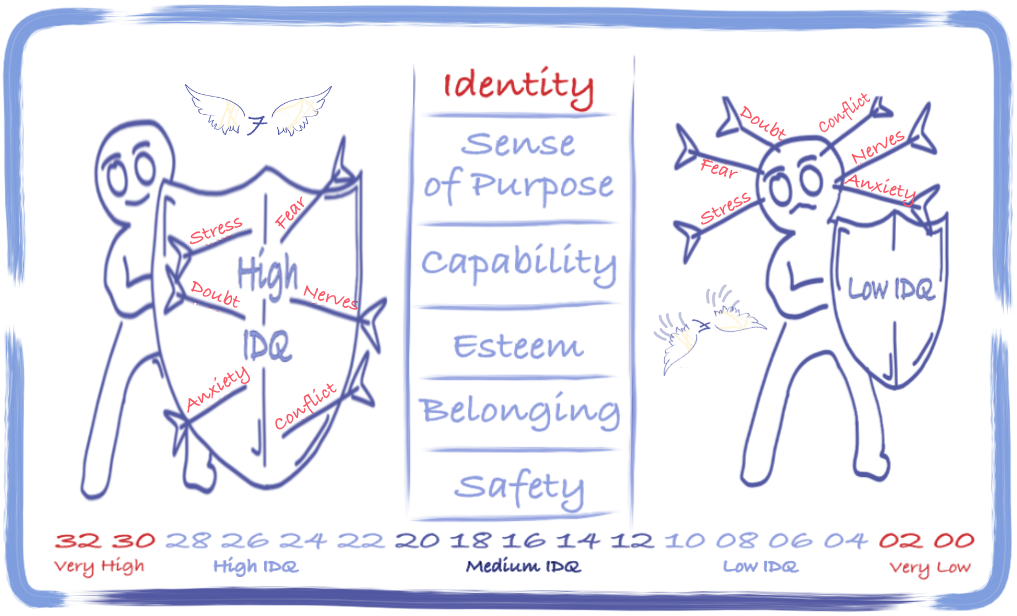
This information on this page explains IDQ and compares a High and Low IDQ. It looks at the Power of a High IDQ and how it unlocks a healthier, happier, and more rewarding Life. And why it makes you more influential and popular.
It will show how parents and teachers with a High IDQ light up their children’s motivation and sense of purpose. And how they nurture their self-esteem and confidence.
It covers how High IDQ coaches and leaders release the skills, abilities and qualities of their people. And lift their athletes, workers and teams to elite-level performance.
We’ll also talk through some advantages of a Low IDQ.

What’s the Difference between a High and Low IDQ?
The 7 Skills to impress™ Identity model, above, shows the IDQ scores along the bottom. The details I give here describe an acute example. So as you read, please keep your score in mind and adjust to a milder take if you feel it fits better.
First, Let’s Take a Look at the Numbers in Red – the Outliers
Someone who scores 30 – 32 is probably overly confident. They are not inclined to critically review their actions because they;
- Totally believe in themselves.
- Seldom accept they are at fault when problems occur.
- Are very bad at taking feedback from other people.
People who score this high can be hugely inspirational. But over time, they tend to lose trust as they come to be seen as out of touch with reality.
Scoring within the 0 – 2 group suggests a very downbeat state of mind. If you score here, then please look out for the following symptoms and seek help if you see yourself in this list;
- Feelings of sadness, tearfulness, emptiness.
- Angry outbursts, being grumpy, even over small matters.
- Loss of interest in most or all normal activities, such as sex, hobbies or sports.
- Poor sleep, unable to sleep or sleeping too much.
- Tiredness and lack of energy, so even small tasks take extra effort.
- Loss of hunger and weight loss or cravings for food and weight gain.
- Constant worry.
- Slowed thinking, speaking or body movements.
- Feelings of failure or guilt, fixating on past failures or self-blame.
- Unable to think clearly or focus, poor memory.
- Often thinking about death or suicide.
- Worrying about illness or issues, such as back pain or headaches.
IDQ and The 7 Skills Identity Model
IDQ and Safety
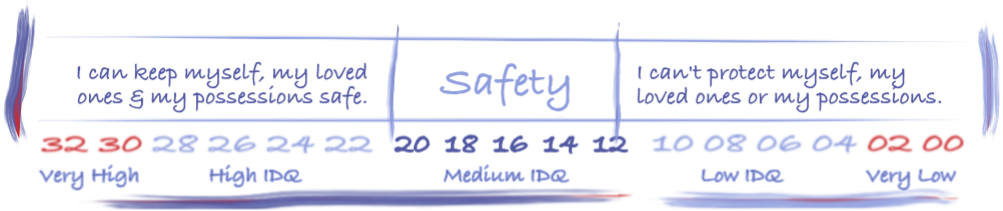
A High IDQ is more likely to see opportunities around them than threats. Which makes them generally more relaxed. They believe they have what it takes to keep themselves, their loved ones, and their possessions safe.
Low IDQs don’t believe they have the SQAs to look after themselves or their loved ones. So, they tend to read threats and problems into many more issues than the average person. This makes them nervous and less willing to take on a challenge or risk.
IDQ and Belonging

They enjoy social interaction at work or in their private life and assume they will be welcome in a group setting, whether with old friends or new people.
If things don’t go perfectly, they are less likely to be put off. They are more receptive to the openings that networks of friends and contacts tend to generate.
Low IDQs fear rejection and doubt whether they are popular or even wanted in social gatherings. And so, they can be nervous and easily offended.
Building networks of friends and contacts is a struggle for Low IDQs. They assume their views will not be respected, so they are reluctant to share them, limiting their chances for growth socially and at work.
IDQ and Esteem

High IDQs are happy to share their ideas and views because they expect to be respected. Their self-esteem is healthy, so they don’t take disagreements or setbacks personally.
Low IDQs believe their lack of popularity and respect is behind everyday conflicts and disputes. And so they are more sensitive and easily offended by seemingly harmless comments.
IDQ and Capability

A High IDQ sees a problem as manageable. They are not ashamed or embarrassed by a setback because, in their ER, it isn’t a reflection of their Identity.
They believe they have the SQAs to cope with and succeed at any challenge. And if they are lacking, they assume they could learn them or find the help and support they need.
a Low IDQ finds setbacks stressful and often feels overwhelmed by problems. They don’t feel confident in the face of a challenge. This is because they see;
This is why they are often embarrassed by setbacks because they believe they reflect on their self-image. They doubt themselves and may view challenges and new opportunities as things to avoid.
IDQ and Sense of Purpose
[From Chapter 4]
Someone who feels safe can look up and be aware of what’s happening around them. If they think they fit in and belong, they will feel part of things and want to shape them.
A good Esteem score means they are used to airing their views and being taken seriously. And the Elevate Formula empowers them to back their skills against any problem they face.
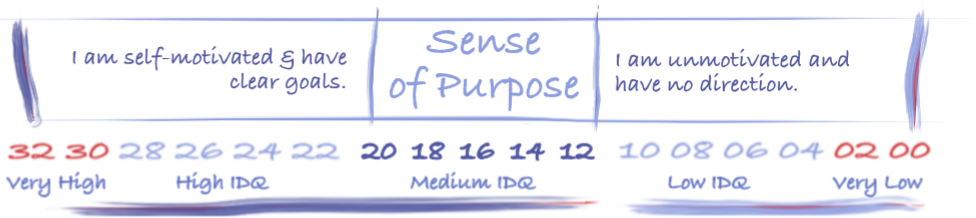
And so High IDQs feel useful. They have something valuable to contribute. Which all this adds up to a desire to make a difference, a belief that they can do so and that it is their purpose. It leads to a life filled with ambition, motivation and intent.
Individuals with Low IDQ traits may have low confidence, feel they have little to offer and become frustrated when trying to get their ideas across.
They may struggle to find meaning in their daily lives and feel unhappy with their personal and work goals. This can affect their overall sense of happiness and well-being.
IDQ and Internal/External

Because they believe in their SQAs, and overall high self-esteem/, a High IDQ tends to an internal Scan. They mostly judge for themselves whether they are right, wrong, or good enough. They are less likely to be influenced by the views of others. This can make them appear confident and self-assured.
Individuals with Low IDQ traits may have low confidence, feel they have little to offer and become frustrated when trying to get their ideas across.
They may struggle to find meaning in their daily lives and feel unhappy with their personal and work goals. This can affect their overall sense of happiness and well-being.
IDQ and Towards/Away From
Their confidence and self-belief tilt their motivation in a Towards direction. So, when confronted by a challenge, they are likelier to seek a solution rather than avoid or deny the issue.
Low IDQs are normally External. They often seek validation from others, as they don’t naturally have the self-confidence to judge for themselves. This can make them appear needy and overly sensitive to feedback. They often change their minds as they react to the varying views of those around them.
Health, Happiness and Success
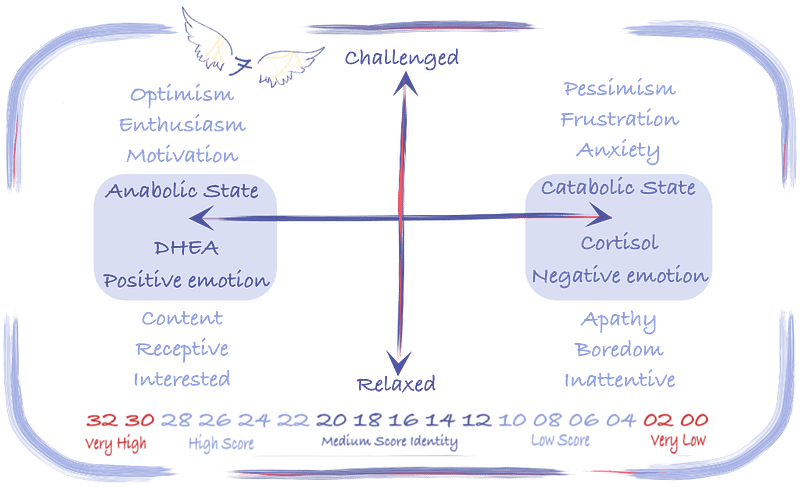
Low IDQ and the Catabolic State
A Low IDQ outlook leads to Catabolic State (CS). CS has many unwelcome effects on a person’s health, happiness, and success. Such as:
- Health: Stress has been linked to many health problems, such as heart disease, diabetes, and a poor immune system. It can also lead to tiredness, poor sleep and mental health problems.
- Happiness: It can lead to anxiety, sorrow, and burnout. This will reduce a person’s overall sense of joy and well-being.
- Success: Stress and downbeat emotions can also affect a person’s ability to perform at their best by reducing their ability to learn, reason, and solve problems. It lowers motivation, confidence and resilience.
When you’re in a CS, the body releases more cortisol and adrenalin. These chemicals are meant to be a short sharp boost during the FFF response.
But if you are stressed for a while, they remain in the body longer than intended. The immune system gets tied up trying to clear them out, so it’s not defending you so well from sickness.
If you’re finding it hard to shake off an infection, it can be a sign that your immune system is busy this way. On top of that, when these chemicals stick around, they speed up the ageing process.
High IDQ and the Anabolic State
You can see the High IDQ score on the left-hand side of the box. which is linked with the Anabolic State (AS). This is a healthy, happy state and a big predictor of longevity.
- Health: High IDQs can see the positive in most situations, which helps them keep a healthy mind and attitude. This state of mind is one in which healing chemicals like Growth Hormone are produced. Their immune system works well, protecting them from illness.
- Happiness: Upbeat emotions, such as joy, gratitude, and contentment, can boost well-being and promote healthy relationships.
- Success: High IDQs are more likely to remain confident and resolve problems when faced with adversity. They may seek creative answers and, if needed, help from their friends and contacts. High IDQs find an ordeal less stressful tha Low IDQs. This means they learn from their mistakes, problems and accidents and move on. And so, High IDQs can bounce back from disappointment more easily.
The lower half of the box shows our state of mind in these states when relaxed. Again the right-hand side is not a happy or healthy place to be.
This is why research suggests that having a High IDQ outlook is better for coping with problems and being resilient. High IDQs are more likely to be happier, healthier and more successful tha Low IDQs.
Inspiring Confidence, Belief and Mental Strength?
Explanatory Style
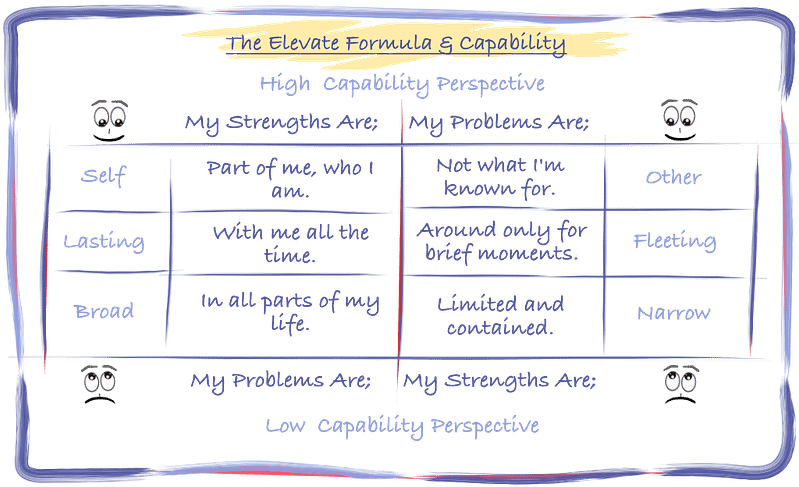
In Chapter 4, we talked about the Elevate Formula (EF). We saw how it shapes your language in everyday speech. To recap, if you have a High IDQ, you will;
- See a challenge as Other, Fleeting and Narrow.
- Think of your SQAs as Self, Lasting and Broad.
- Believe your SQAs will see off the challenge.
For a Low IDQ, these three positions are switched.
Because we talk instinctively when dealing with everyday events, our natural form of EF streams out in our every spoken word, judgment and reaction. This is called our Explanatory Style (ES).
Our Explanatory Style has a huge effect on the people around us. With it, parents, teachers and carers unwittingly shape a child’s self-esteem. And for coaches and leaders, it dramatically affects their people’s performance, motivation and resilience.
Low IDQ Explanatory Style
A Low IDQs Explanatory Style makes a child nervous and uncertain in the face of a challenge. It creates brittle and underperforming teams. This is because they learn that;
- Adversity is Self, Lasting and Broad.
- Their SQAs are Other, Fleeting and Narrow.
The Low IDQ language structure is downbeat. And so, a Low IDQ will naturally, unthinkingly and routinely teach that adversity is stressful and problems are overwhelming.
High IDQ Explanatory Style
a High IDQ’s Explanatory Style helps a child grow into a healthy, happy and successful adult. It creates individuals and teams that are more confident and resilient.
a High IDQs words are naturally uplifting. They teach us that adversity is less stressful because it won’t last, it’s not about us, and we have the SQAs to overcome.
And so, a High IDQ will naturally, unthinkingly and routinely teach confidence, belief and mental strength. Tools everyone needs to thrive in a challenging world.
Modelling Explanatory Style
Explanatory Style isn’t just mirrored in your language. It’s reflected in your reactions to everyday problems.
Children model themselves on how they see their parents, carers, and teachers behave. And coaches and leaders define the beliefs and values they want for their brand through their words and actions.
Here are some key outcomes from modelling. To be brief, I have only given the High IDQ perspective here because I think it’s easy enough to figure out the reverse Low IDQ position.
- High IDQs are more patient and calm. So, they are less likely to get frustrated or angry during the challenging moments everyone experiences from time to time.
- High IDQ people are generally more supportive and encouraging, which can help their children develop confidence and self-esteem. It deepen Rapport between coaches, leaders and their people.
- High IDQs are more likely to adapt to change and be open to new ways. This can be particularly important in parenting. Children grow and develop quickly, and moving with their evolving needs and nature is vital for a healthy mind. And in sports and business, research has shown that forward thinking and flexibility seed survival, growth and success.
- High IDQ coaches and leaders are calmer under pressure. They engender respect, and even a dressing down can be empowering when couched in EF terms.
- High IDQ parents, teachers, carers, coaches and leaders naturally use setbacks to build self-belief and resilience. Because they will phrase the problem as Other, Fleeting and Narrow; while addressing SQAs as Self, Lasting and Broad.
Positives of a Low IDQ
Many readers with a Low IDQ score may counter what I say above and point to many successes in their lives. And indeed, there are some positive outcomes of having a Low IDQ.
So we’ll take a look at this side of the coin now. But I’ll also explain why the successes of a Low IDQ may come at a cost.
To kick us off, here are a few of the reasons why Low IDQs are equipped to succeed;
- Lower expectations: Low IDQs are less likely to be surprised if things do not go to plan. This can lead to greater resilience.
- Being prepared: Low IDQs are more cautious and prepare for things to go wrong. This can be useful where being ready for the worst-case scenario can help avoid disaster.
- Realistic: Low IDQs tend to have a more realistic view of problems and are less likely to overlook likely risks or dangers. This can help them avoid making costly mistakes.
The Value of Low IDQ Caution in High-Risk Situations
In my police career, I found Low IDQs could be very useful. I led many high-risk operations that carried a severe risk to the safety of my officers and the public. Failure in these jobs could be catastrophic.
When I was planning with my team for a tricky operation, the Low IDQs were the ones most focused on all the potential pitfalls. The trouble for them was how they would express their caution. They’d typically say something like, “You can’t do that boss because…”.
This caused most people to dismiss them as “negative”. But I’d ignore the sentence’s first half, listen for what came next, and take note. And then, I would adapt my plans to cater for the difficulties they’d foreseen. I was always grateful for how their caution balanced my optimism. And that my jobs went well because of the steps I’d built in following their feedback.
Burn Out and the Search For Success
I have coached many successful people with a Low IDQ. And it became clear to me that they share a couple of common traits;
- They are never satisfied with anything they have achieved.
- They feel every slip-up or setback deeply.
Their successes seem to come from a drive to prove themselves. They show huge resolve as they push themselves on, looking for the success that eventually proves they are ‘good enough’.
But their low self-image never lets them feel good about their achievements. The Elevate Formula ensures they see their wins as Other, Fleeting and Narrow.
And any slip-up or setback hurts them deeply because they feel they are a true representation of who they are. In other words, they instinctively frame their failures as Self, Lasting and Broad.
And no amount of success changes this. And by the time they come to me for coaching, this constant battle to prove themselves has left them feeling burnt out.
What Would You Choose? High or Low IDQ?

I’ve been that Low IDQ person, continually pushing myself out of my comfort zone. Searching for the success that would prove my worth. And nothing I achieved changed my Identity Beliefs and the Edited Realit they created for me.
I worked out how to make a change for myself and move my IDQ score into the High IDQ range. And for over twenty years, I have helped parents, carers, teachers, athletes, coaches and leaders to do the same.
So I know what the difference feels like, and I’ve seen the change in others. After years of working with the 7 Skills and coaching, assessing and advising too many people to count, I’d take High over a Low IDQ any day.
I’d happily swapped a little realism for a bit more optimism. I’d recommend aiming for a score anywhere from 15 – 22 – preferably to the higher end of that range – and enjoying the happy, healthy and fulfilled life it offers.
This is the job The 7 Skills to impress™ were built for
What’s Next

The page you have just read is adapted from the last chapter of Part 1 of The 7 Skills Book. Here’s what one reader said about The book.:
“One of the most interesting aspects of The 7 Skills to impress™ is Mark’s ability to explain complex scientific concepts in a way that is accessible and engaging. He uses analogies, exciting stories, and fascinating real-life examples to illustrate his points, making this work informative, practical, and entertaining.”
Part 1: The Theory of Edited Reality and Identity
In Part 1, the foundations for the 7 Skills are laid out. Reading them is highly recommended and good fun.
To get started, click here: Prelude. Three Seconds To Save a Life: Jacqui’s Story.
Part 2: The 7 Skills to impress™
The 7 Skills to impress™ are simple tools you can use anywhere and anytime. They create self-belief and resilience. The 7 Skills will make you the person people want to talk to and help you find the words that move people.
Start learning the 7 Skills here: Skill 1: Identify Your Outcome.
A Case Study and Guide
In Part 3 of The 7 Skills to impress™, I go over how I created and delivered an inspiring speech to lift a rugby team out of a slump in form.
It worked a treat. I used The 7 Skills to boost my confidence and smash through my performance glass ceiling. The speech was powerful, and I inspired the team to go on a record unbeaten run.
I cover all of The 7 Skills, how I set myself up to perform at the very peak of my potential and my step-by-step system for writing inspirational speeches.
For Part 3, A Case Study, start here: The Challenge.
Index
Glossary of Terms
References with Summary
References:
Please also see the References for Chapters 4 and 5.
Chang, E.C., et al. (2001). Optimism and pessimism as partially independent constructs: Relations to positive and negative affectivity and psychological well-being. Journal of Personality and Social Psychology, 81(2), 263-272.
Moore, D.A., et al. (2006). Overconfidence in interval estimates. Journal of Personality and Social Psychology, 90(3), 458-469.
Liu, R.T., et al. (2017). Pessimism and cortisol reactivity in response to stress: Distinguishing between stressors and individual differences. Social Science & Medicine, 186, 10-16.
Tappy, L., et al. (2010). Catabolic state of obesity: metabolic implications and therapeutic management. Journal of Clinical Endocrinology & Metabolism, 95(7), 2539-2547.
Kim, E.S., et al. (2015). Optimism and the cortisol response to acute stress: A preliminary investigation. Psychoneuroendocrinology, 55, 127-130.
Mendel, R.W., et al. (2019). Anabolic processes in human health and disease: Nutrient signaling and beyond. Nutrients, 11(6), 1356.
Gillham, J.E., et al. (1995). Attributional style, parents’ communication, and children’s self-esteem: A prospective study. Personality and Social Psychology Bulletin, 21(7), 732-739.
Norem, J.K., & Cantor, N. (1986). Defensive pessimism: Harnessing anxiety as motivation. Journal of Personality and Social Psychology, 51(6), 1208-1217.
Shepperd, J.A., et al. (2005). Dispositional optimism as a predictor of health outcomes: A systematic review. Annals of Behavioral Medicine, 29(3), 307-316.
Sweeny, K., et al. (2010). The detrimental effects of optimism on warning and prevention in health and safety contexts. Current Directions in Psychological Science, 19(6), 345-350.