
We are talking about nurturing a High Identity Quotient (High IDQ) in your children. A High IDQ paves the way for a healthy, happy, and successful life. This is thoroughly explained in Part 1 of the 7 Skills Book, Chapter 6, “Unleash Your Potential“.
Your child has a High IDQ when their sense of security, belonging, and worth is strong enough for them to grow into optimistic, capable, and inspiring adults, unfazed by life’s challenges.
This programme will help you guide your child to develop a High IDQ. And with that armour, they will have what they need to build a healthy, happy, and successful life.
If You Haven’t Already, Try the Identity Questionnaire to see if you have a High IDQ.
click here
Identity As A Shield
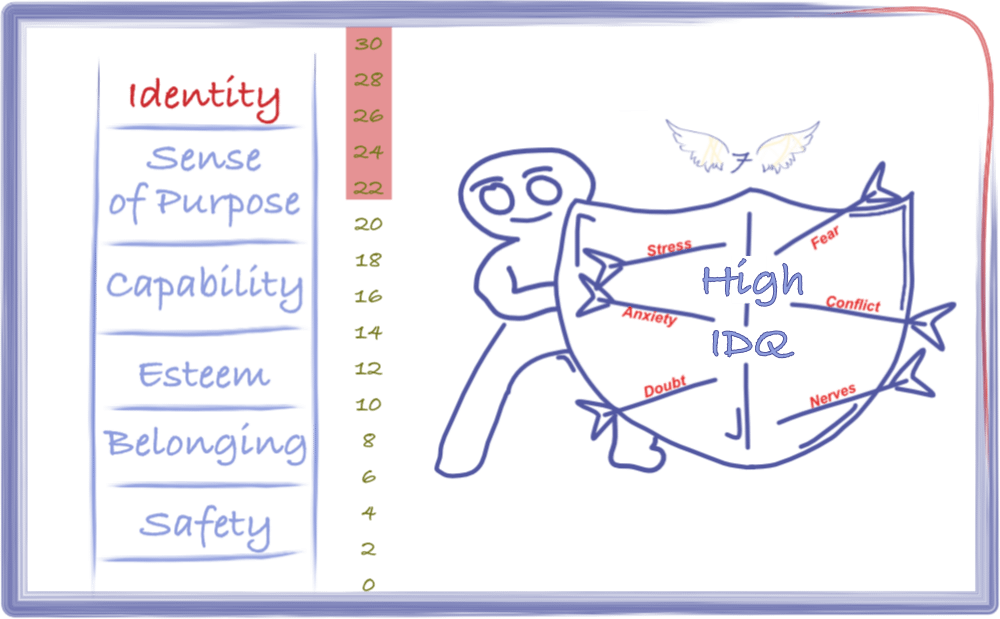
It can be hard to keep our poise and feel good about ourselves when we go through difficult times. We may even question whether we are capable, loved, wanted or respected.
We feel more stressed when we’re like this, and releasing our talents is harder.
A High IDQ gives us bulletproof self-esteem and lifts us above these limitations. It gives us the foundations to be our authentic selves even in adversity.
With this shield, we can feel good about ourselves, whatever the trials we face.
And as parents and carers, it’s natural that we want to help our children build this shield to empower them for a happy, healthy and successful life.
Five Core Concepts You Need To Know
As you know from the 7 Skills book, we always start with an Outcome. Here are five suggestions for Outcomes to guide your efforts. Feel free to develop your own if you prefer:

To Guide Your Child;
- To become aware of their strengths, qualities and attributes (SQAs).
- To know that their SQAs are Self, Broad and Lasting.
- To see problems and stress as Other, Narrow and Fleeting.
- To believe they can learn and develop any valuable skills they may lack.
All the tools from The 7 Skills Book, Part 2, Skill 2 (link above) will be really useful. And there’s a really important tool kit that will help you with composure while giving you a deep insight into your work with your children.
Excuse me for asking this again, but are you doing Review and Preview…
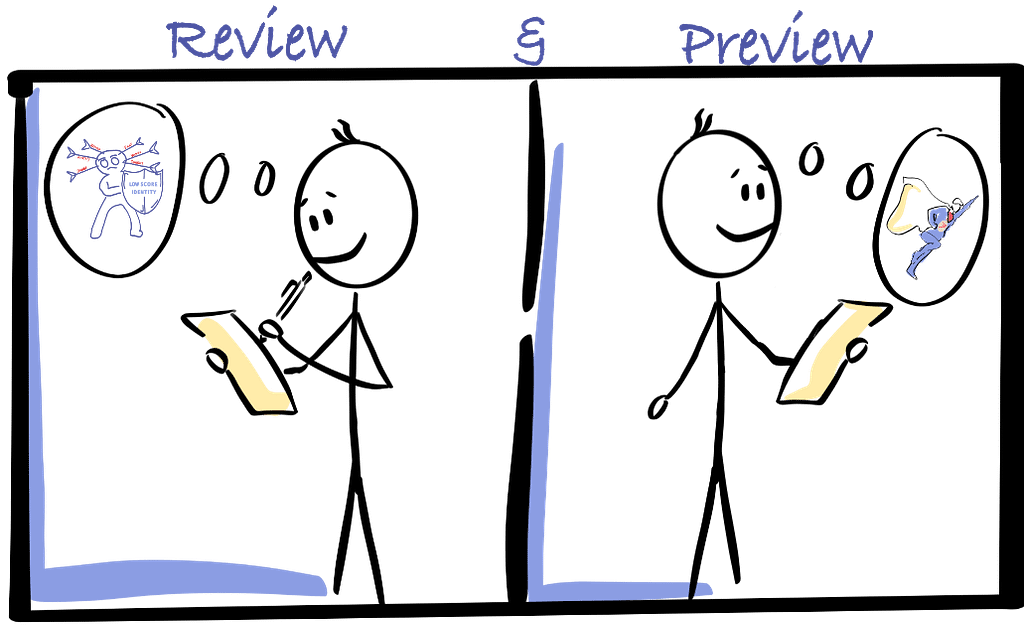
Coaching a High IDQ in your children is a long-term goal. In the real world, many things can knock you off track. It’s so easy to get sidetracked by busy lives, setbacks, and slow progress.
R&P is the natural way to stay committed to your outcomes over time. You can weave all your successes and setbacks into it, giving you momentum and insight for your work with your child.
And it will carry you through the hard yards to success.
3. Identity and Edited Reality
Make sure you’re familiar with these chapters from the 7 Skills to Impress Book:
- Part 1, Identity and Edited Reality.
You have to know this concept. You want your child to develop an Edited Reality that gives them wings. This is a long-term task in which you are a teacher AND role model. So you need to know what this is about.
4. IMP
And you need to know the first three of the 7 Skills, often called ‘IMP’. They are vital. With IMP, you target both your System 1 and System 2 on your task:
- Skill 1, Identify Your Outcome.
- Skill 2, Manage Your State.
- Skill 3, Practice Rapport
IMP is the anchor to focus you and keep you calm and on track when the going is hard. And IMP will open your children’s minds to your teaching and help you develop a lifelong bond.
5. The Elevate Formula
The Elevate Formula is the foundation for everything below. If you are familiar with this chapter, you will understand all the jargon, tips and methods.

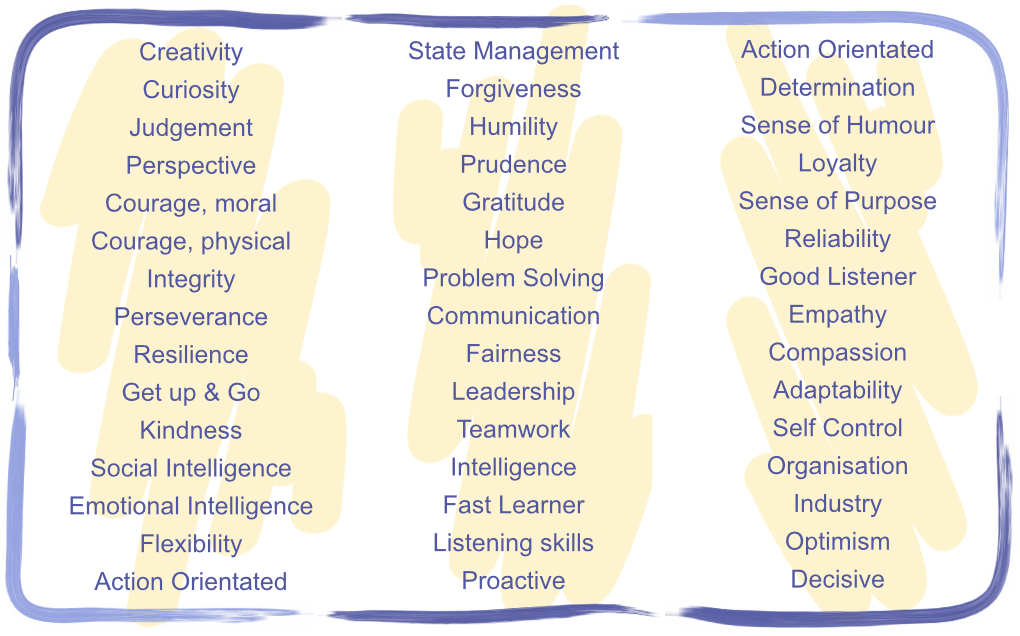
An SQA List
I think you’ll find this list helpful. Use it any way you wish, as a template or a prompt. Please choose words and phrases that work for you and your family, whether from that list or others you feel are a good fit.
Building Self-Esteem is Not Boosterism!
There is a risk of praising children when there is little to back it up. If we fall into this trap, our children’s self-esteem will be built on flimsy footings.
Later in life, they’ll have nothing to draw upon when they step out on their own to face life’s challenges. The fall from misguided confidence to self-doubt can be crushing.
There is a sweet spot between supportive care and shallow ‘boosterism’. Our children need to develop genuine self-awareness of their strengths and abilities. And also what they still have to learn.
It’s from these honest beginnings that their High IDQ will grow.
Keep this in mind, and you’ll find the right path.
How to Install A High IDQ in Practice
We’ll get started slowly and with intent, using real-life experiences. And our work will follow five threads:
Thread 1: Draw Out Your Chilld’s Strengths.
Thread 2: Nurture Your Child’s Belief in their SQAs.
Thread 3: “Use The Difficulty” and relate your child’s SQAs to future challenges.
Thread 4: Supercharge your child’s SQAs with The Elevate Formula.
Thread 5: Help your child develop their Inner Compass.
OK, That’s enough introduction.
Up Next: Thread 1: Draw Out Your Child’s Strengths
Now that you understand the critical steps for installing a High IDQ, don’t let this information sit on the shelf – take action today.
Start a notebook, set your Outcomes, and pull out the first SQAs for your child this week. Begin equipping them with inner armour that will last a lifetime, and hit the link to Thread 1 below:
Thread 1: Draw Out Your Child’s Strengths